


 US-Led Coalition Targets Global Factory Overcapacity
  Global Stocks Mixed as Oil Falls Ahead of US Earnings
  Gold Prices Rise as Hormuz Tensions Fuel Inflation Risks
  FxWirePro: Daily Commodity Tracker - 21st March, 2022
  US Dollar Rises for Fourth Week as Fed Rate Hike Bets Grow
  Bank of America Predicts Yen Rebound as USD/JPY Faces Risks
  Trump Secures Russian Diesel Deal as US Fuel Prices Surge
  European Stocks Rise as Oil Prices Fall Ahead of US CPI


 Add as a preferred source on Google
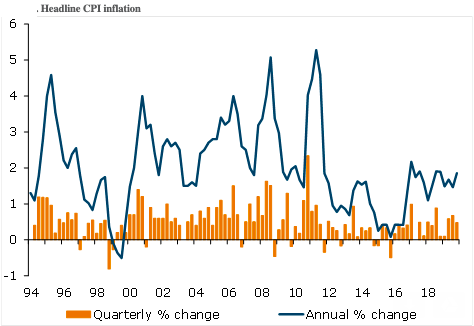
New Zealand’s consumer price inflation (CPI) lifted 0.5 percent q/q in Q4 – in line with ANZ forecasts, but stronger than the market (0.4 percent) and the Reserve Bank of New Zealand’s (RBNZ) November MPS forecast (0.2 percent).
At 1.9 percent, annual inflation is running just 0.1 percentage points shy of the 2 percent target midpoint, but with non-tradeable inflation expected to remain close to 3 percent y/y and a lift in tradeable inflation in the pipeline, 2020 should bring a 2-handle.
The surprise versus the RBNZ’s forecast comes from stronger-than-expected tradeable inflation. This is the more volatile and less persistent type of inflation, given it is heavily influenced by exchange rate movements and global supply and demand dynamics, ANZ Research reported.
Tradable inflation lifted 0.4 percent q/q (RBNZ: -0.2 percent q/q), reflecting recent NZD weakness. The lift is stronger than is typical for a December quarter. A smaller seasonal dip in fruit and vegetable prices contributed.
Non-tradable (domestic) inflation rose 0.6 percent q/q, with housing-related costs (rents and the purchase of housing) remaining a persistent driver. With the housing market picking up, this theme looks set to continue for a while yet.
Annual headline inflation lifted to 1.9 percent from 1.5 percent in Q3, with non-tradable inflation dipping 0.1 percentage point from Q3 to 3.1 percent y/y and tradable inflation lifting to 0.1 percent y/y from -0.7 percent y/y.
"Looking forward, we think economic activity is poised to gradually accelerate over the year ahead and grow around trend over the medium term, with resurgence in the housing market, improving business sentiment and the promise of a little extra government spending on key infrastructure all supporting. Unless something untoward happens, we think the RBNZ will keep the OCR at its current, stimulatory, level of 1 percent for the foreseeable future," ANZ Research further commented in the report.







