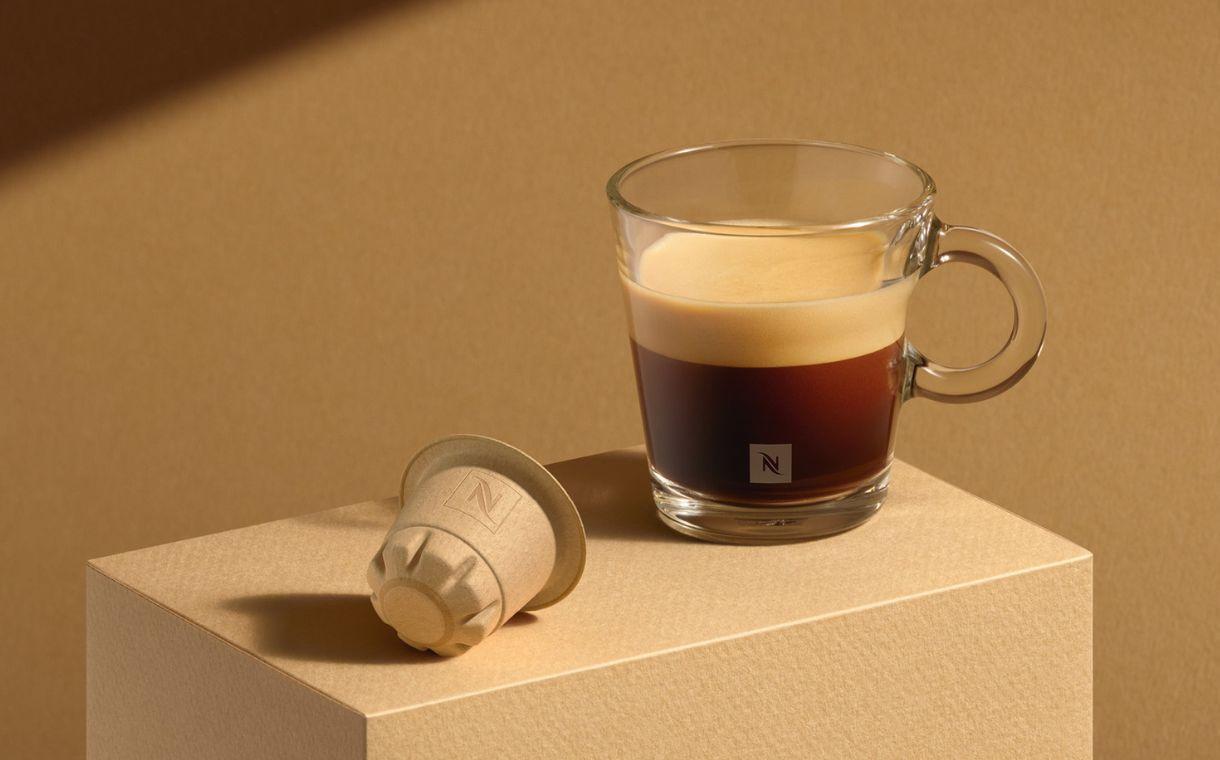
Nespresso has launched its compostable paper-based coffee capsules, which protect coffee against oxidization during transport, storage, and high-pressure extraction.
The capsules feature proprietary technology, such as a biopolymer lining, based on three years of research and development with sustainable packaging solution provider Huhtamaki.
According to Julia Lauricella, head of Nestlé System Technology Centre, they combined a high-precision paper pulp forming process with a biodegradable layer for protection against oxidation.
Huhtamaki CEO, Charles Héaulmé, added that part of this breakthrough innovation is the result of combining paper pulp from wood fiber and compressing it to a coffee capsule using their high-precision technology.
The paper-based capsules are certified for composting by the international certification body, TÜV Austria.
Nespresso also uses recyclable aluminum capsules that are made using 80 percent recycled aluminum.
The new range will pilot in France and Switzerland on the Nespresso Original system and will be launched in several other European countries within the year.