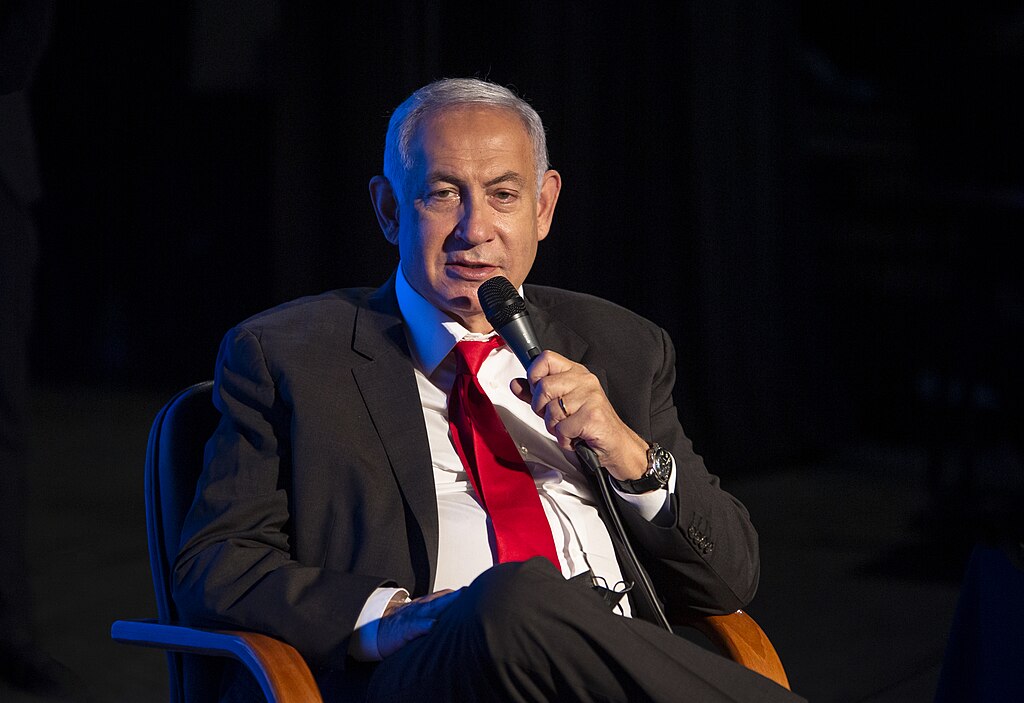
Israeli Prime Minister Benjamin Netanyahu said on Tuesday that Israeli forces will remain in southern Lebanon until the threat posed by Iran-backed Hezbollah is eliminated, signaling that Israel has no immediate plans to withdraw despite a recent U.S.-mediated security agreement with Lebanon.
During a visit to Israeli-controlled territory in southern Lebanon, Netanyahu told Israeli troops that the military presence would continue as long as Hezbollah remained armed and capable of launching attacks against Israel. According to a statement from his office, Netanyahu stressed that Israel's priority is ensuring the security of its northern communities before any withdrawal takes place.
The visit marked Netanyahu’s first trip to the occupied Lebanese territory since Israel and Lebanon reached a U.S.-brokered security agreement last Friday. Under the agreement, Israel is expected to hand over control of two designated "pilot zones" to the Lebanese Armed Forces, although officials have released few details about how the transition will be implemented.
Netanyahu was accompanied by Defense Minister Israel Katz and senior military commanders during the visit. He stated that Hezbollah still possesses approximately 12,000 rockets and missiles and claimed Israeli forces have killed around 9,000 Hezbollah militants since fighting intensified on March 2. He did not specify the timeframe for that figure. Hezbollah has not publicly released casualty numbers, though Reuters previously reported that several thousand of its fighters had been killed during the conflict.
Israel launched its military campaign in Lebanon after Hezbollah fired into Israeli territory on March 2, an attack the group said was in response to U.S. and Israeli strikes on Iran on February 28. The conflict escalated into a broader regional war that has claimed thousands of lives across Iran, Lebanon, Israel, and Gulf countries.
Israeli forces have since established what they describe as a security buffer zone extending roughly 10 kilometers into southern Lebanon along the border. Israeli officials argue the zone is necessary to prevent future Hezbollah attacks, while the military says it has targeted Hezbollah infrastructure, including underground tunnels and military positions.
The conflict has caused widespread destruction and displacement in Lebanon. More than 4,000 Lebanese have reportedly been killed, while over one million people have been forced to flee their homes since the fighting began. On the Israeli side, at least 32 soldiers and four civilians have been killed in Hezbollah attacks, most of them in southern Israel.
Iran has repeatedly called for a ceasefire in Lebanon as part of its broader negotiations with the United States aimed at ending the regional conflict. Israel, however, has opposed linking the Lebanon front to the separate negotiations involving Iran.
Although Israel agreed to a U.S.-backed ceasefire with Hezbollah on June 19, sporadic violence has continued. Hezbollah has also criticized the ongoing negotiations between Israel and Lebanon and is not participating in the diplomatic talks, leaving uncertainty over the long-term prospects for stability along the Israel-Lebanon border.