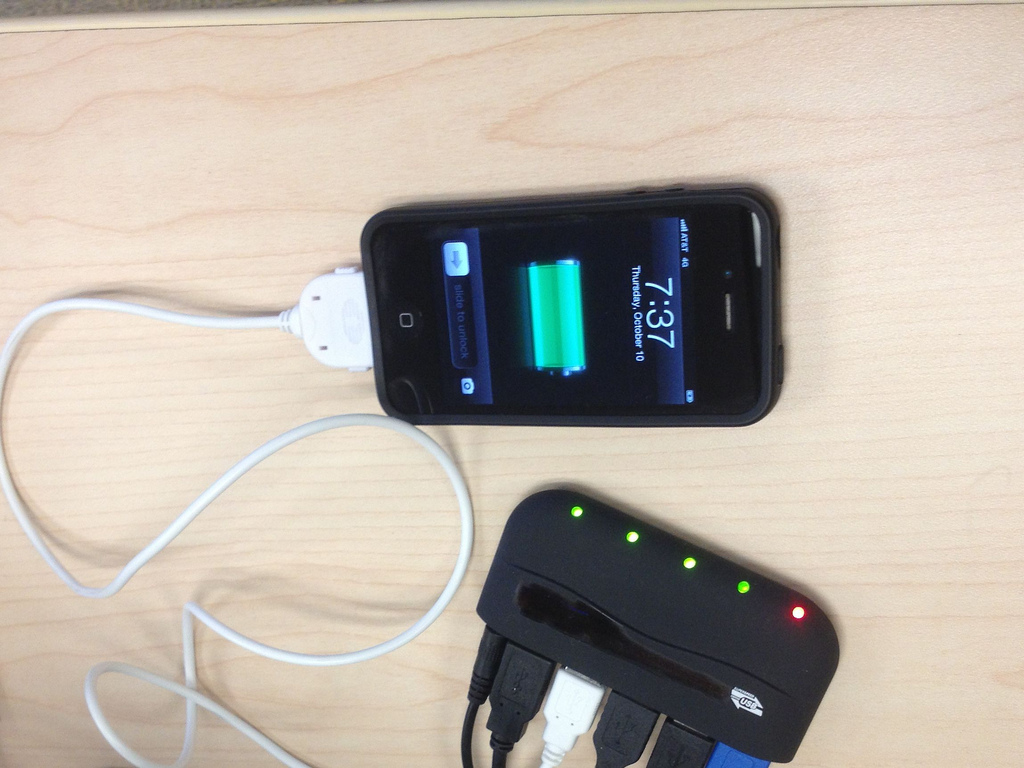
One of the main problems that modern smartphone users face is the matter of slow charging for their devices. Some units actually take hours to fully charge and a lot of people simply don’t have time for that. In a recent development, scientists created a material that could allow smartphones and other electronic devices to fully recharge in seconds or minutes.
The material in question is called the MXene and it was created by Drexel University researchers. Speaking to Drexel Now, the school’s official news bulletin, lead researcher Yuri Gogotsi explained just how amazing this new material is and why it should matter to smartphone users.
“If we start using low-dimensional and electronically conducting materials as battery electrodes, we can make batteries working much, much faster than today,” Gogotsi said. “Eventually, appreciation of this fact will lead us to car, laptop and cell-phone batteries capable of charging at much higher rates — seconds or minutes rather than hours.”
Such fast charging prospects would certainly be appealing, especially when paired with new battery technology that would last for a lot longer. As it stands, with so many energy-hungry apps and features that smartphones are equipped with, most models don’t even last a full day’s worth of use.
As to how it can even achieve such ludicrous charging speeds, another researcher behind the project Maria Lukatskaya explains. Apparently, it has to do with having more roads for particles to travel through.
“The ideal electrode architecture would be something like ions moving to the ports via multi-lane, high-speed ‘highways,’ instead of taking single-lane roads,” she explains. “Our macroporous electrode design achieves this goal, which allows for rapid charging — on the order of a few seconds or less.”
Unfortunately, users will need to wait about three years for the material to make it to the mass consumer market if at all, Futurism notes. Once it does, it’s expected that nano-level changes in the tech industry will follow.