
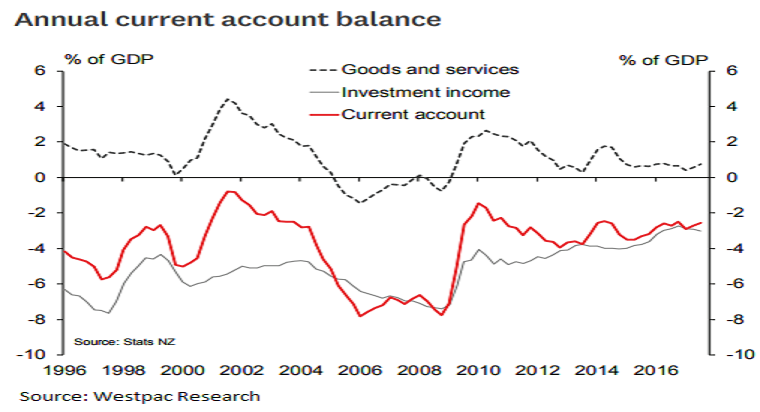
New Zealand’s annual current deficit is expected to narrow further, with dairy export prices and volumes both stronger than they were a year earlier. However, a recent surge in imports (see below) challenges our view on how far the deficit will narrow.
The country’s current account deficit narrowed slightly to 2.6 percent of GDP in the year to September. That compares to a deficit of 2.7 percent in the year to June (revised from 2.8 percent, thanks to upward revisions to nominal GDP). The deficit was larger than we expected, due to higher imports and lower earnings from overseas investments.
In seasonally adjusted terms, the goods trade deficit narrowed to NZD26 million, the smallest deficit in three years. Exports were fairly steady in the September quarter, while imports fell, though not as much as we expected. The surprise was due to conceptual adjustments (such as the timing of changes of ownership), which is not a persistent factor.
The surplus on services trade narrowed to NZD1,186 million in September. However, it didn't fully unwind the jump in tourism earnings in the June quarter, which was boosted by the Lions rugby tour.
The investment income deficit widened to NZD2,384 million in September, compared to NZD2,072 million in June. Earnings from New Zealanders' investments abroad fell by more than we expected. Investment income outflows also fell slightly.
Meanwhile, FxWirePro launches Absolute Return Managed Program. For more details, visit http://www.fxwirepro.com/invest

