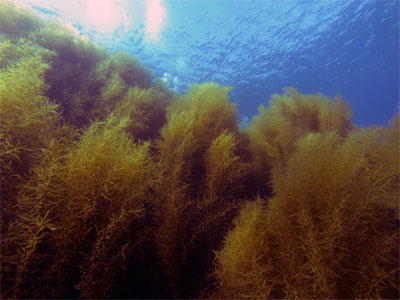
South Korea’s Ministry of Oceans and Fisheries and a research team at Pohang University of Science and Technology will begin developing technology that uses marine plants to produce biodegradable plastic material.
Among the marine plants is an invasive algae called Sargassum horneri.
Each year, 24 tons of Sargassum horneri grow in South Korea to pose a problem. Using the algae will help the environment, government officials pointed out.
The team will use a strain that doesn’t require preliminary processing to produce biodegradable plastic material such as itaconic acid, 3-HP and lactic acid by 2026.
It also intends to develop a separate technology for combining monomers to obtain plastic properties, which will compensate for the shortcomings of environmentally friendly plastic, which has weaker plastic properties than petroleum-based plastic.


U.S. Cyber Monday Online Sales Surge Past $9.1 Billion as Holiday Shopping Momentum Builds
CDC Vaccine Review Sparks Controversy Over Thimerosal Study Citation
Wikipedia Pushes for AI Licensing Deals as Jimmy Wales Calls for Fair Compensation
Swimming in the sweet spot: how marine animals save energy on long journeys
Senate Sets December 8 Vote on Trump’s NASA Nominee Jared Isaacman
U.S. Stocks Slip as Investors Await Fed Rate Decision and Monitor Market Shifts
Wildfires ignite infection risks, by weakening the body’s immune defences and spreading bugs in smoke
GesiaPlatform Launches Carbon-Neutral Lifestyle App ‘Net Zero Heroes’
Amazon Debuts “Amazon Now” for 30-Minute Ultrafast Grocery Delivery
Eli Lilly’s Inluriyo Gains FDA Approval for Advanced Breast Cancer Treatment
What’s so special about Ukraine’s minerals? A geologist explains
Microchip Technology Boosts Q3 Outlook on Strong Bookings Momentum
YouTube Agrees to Follow Australia’s New Under-16 Social Media Ban
How to create a thriving forest, not box-checking ‘tree cover’
Australia Moves Forward With Teen Social Media Ban as Platforms Begin Lockouts 


