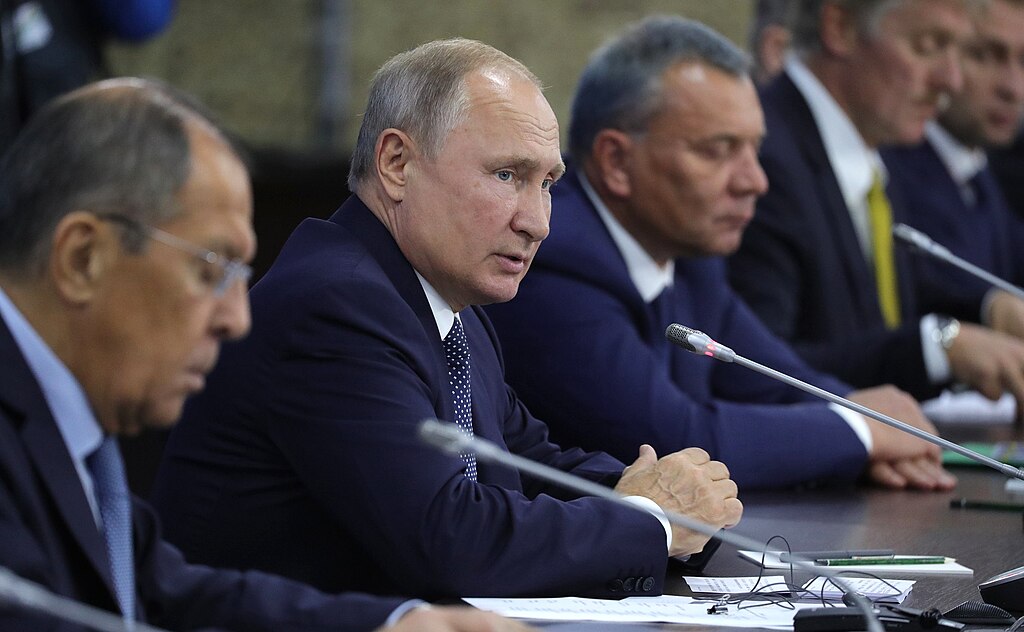
Russian President Vladimir Putin on Wednesday supervised a comprehensive test of the country’s nuclear triad—land, sea, and air—demonstrating Moscow’s strategic readiness amid escalating tensions with the West. The large-scale exercise aimed to evaluate the preparedness and command structure of Russia’s nuclear forces, which remain the largest in the world.
According to the Kremlin, the drill involved the successful launch of a land-based “Yars” intercontinental ballistic missile from a Russian cosmodrome, a “Sineva” ballistic missile fired from a nuclear-powered submarine stationed in the Barents Sea, and nuclear-capable cruise missiles launched from long-range strategic bombers. The exercise tested coordination among Russia’s nuclear command units, as well as the ability of personnel to operate effectively under simulated combat conditions. “All exercise tasks were completed,” the Kremlin confirmed in an official statement.
These nuclear readiness drills are part of Russia’s ongoing efforts to ensure its deterrence capabilities and demonstrate its military strength at a time of heightened East-West friction. Analysts note that such exercises serve both a technical and political purpose, showcasing Russia’s ability to maintain operational control and respond swiftly to potential threats.
The test coincided with NATO’s own annual nuclear training, Steadfast Noon, which began earlier this month. The Western alliance’s exercise includes around 60 aircraft—among them F-35A fighter jets and U.S. B-52 bombers—from 13 member nations. Hosted by Belgium and The Netherlands, NATO’s drills are designed to enhance nuclear deterrence coordination among allied forces.
As both Russia and NATO flex their nuclear capabilities, global observers warn that such parallel exercises highlight growing geopolitical instability and the risks associated with renewed nuclear posturing in an increasingly polarized world.