
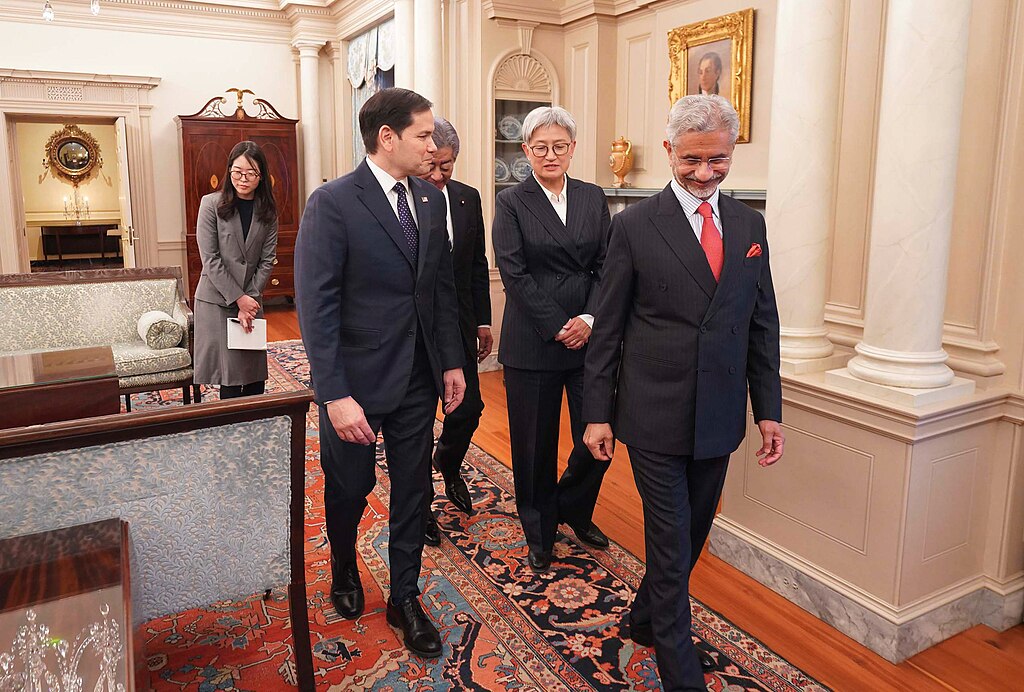
The Quad—comprising the United States, India, Japan, and Australia—issued a strong condemnation of the April 22 Islamist militant attack in India-administered Kashmir that killed 26 people. In a joint statement released by the U.S. State Department following a meeting of foreign ministers in Washington, the group called for swift justice against the perpetrators, organizers, and financiers of the attack.
Although India blames Pakistan for the deadly assault, Islamabad denies involvement and has called for a neutral investigation. The Quad's statement avoided naming Pakistan directly but emphasized the need for accountability and global cooperation, especially through the United Nations, in addressing terrorism and cross-border extremism.
Tensions between nuclear-armed India and Pakistan escalated sharply following the incident. On May 7, Indian fighter jets struck what New Delhi described as "terrorist infrastructure" across the border. This triggered a violent exchange involving missiles, drones, and artillery, leading to dozens of casualties before a ceasefire was reached on May 10.
U.S. President Donald Trump announced the ceasefire on social media, claiming it resulted from American mediation. However, India rejected the assertion, maintaining that the de-escalation stemmed from its own diplomatic efforts and reiterated its long-standing stance that all disputes with Pakistan should be resolved bilaterally, without third-party involvement.
Indian External Affairs Minister Subrahmanyam Jaishankar reaffirmed this position on July 1, stating that trade was unrelated to the ceasefire and emphasizing that challenges in international relationships are inevitable. What matters, he said, is the ability to manage issues while maintaining forward momentum in partnerships—particularly with the United States—as India strengthens its strategic role in the Indo-Pacific.


