
- Brazil's central bank raised interest rates by 50 basis points to 12.75 percent to contain the inflationary pressure.
- Inflation exceeds the central bank's target of 4.5 percent (with 2 percent range) to annualized 7.14 percent.
- In January inflation grew at 1.24 percent mom.
Economy at a glance -
- Economy is slowing down since 2014. Second quarter GDP was -0.9 percent and third quarter -0.2 percent, putting the country in technical recession.
- Interest rates are at twelve year high.
- Unemployment rate hovering above the level of 2014 to 5.3 percent.
- Trade balance deteriorating since September 2014 and current stands at $ -2.84 billion
- Terms of trade deteriorating at faster pace since the latter half of 2011.
Impact -
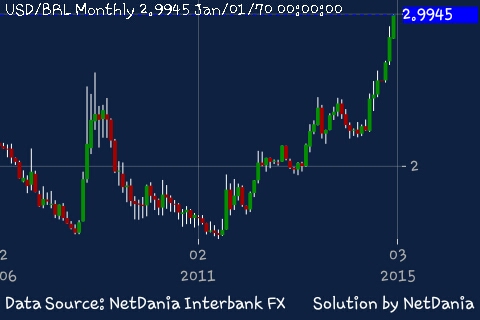
- Brazilian currency is trading close to 3 against the dollar, a level not seen since 2004.
- Brazilian stock index has fallen close to 20 percent since September last year.
These trends could continue further.
Why?
- As the Federal Reserve is going to raise rates this year the pain could be more acute.
- Raising the rates in Brazil would increase the pain of Brazilian companies as the falling real has contributed more towards inflation than domestic factors.
- Brazil needs reforms over its tax policy and evasion, exports and fiscal policy and until such happens raising interest rates would be a temporary relief.


