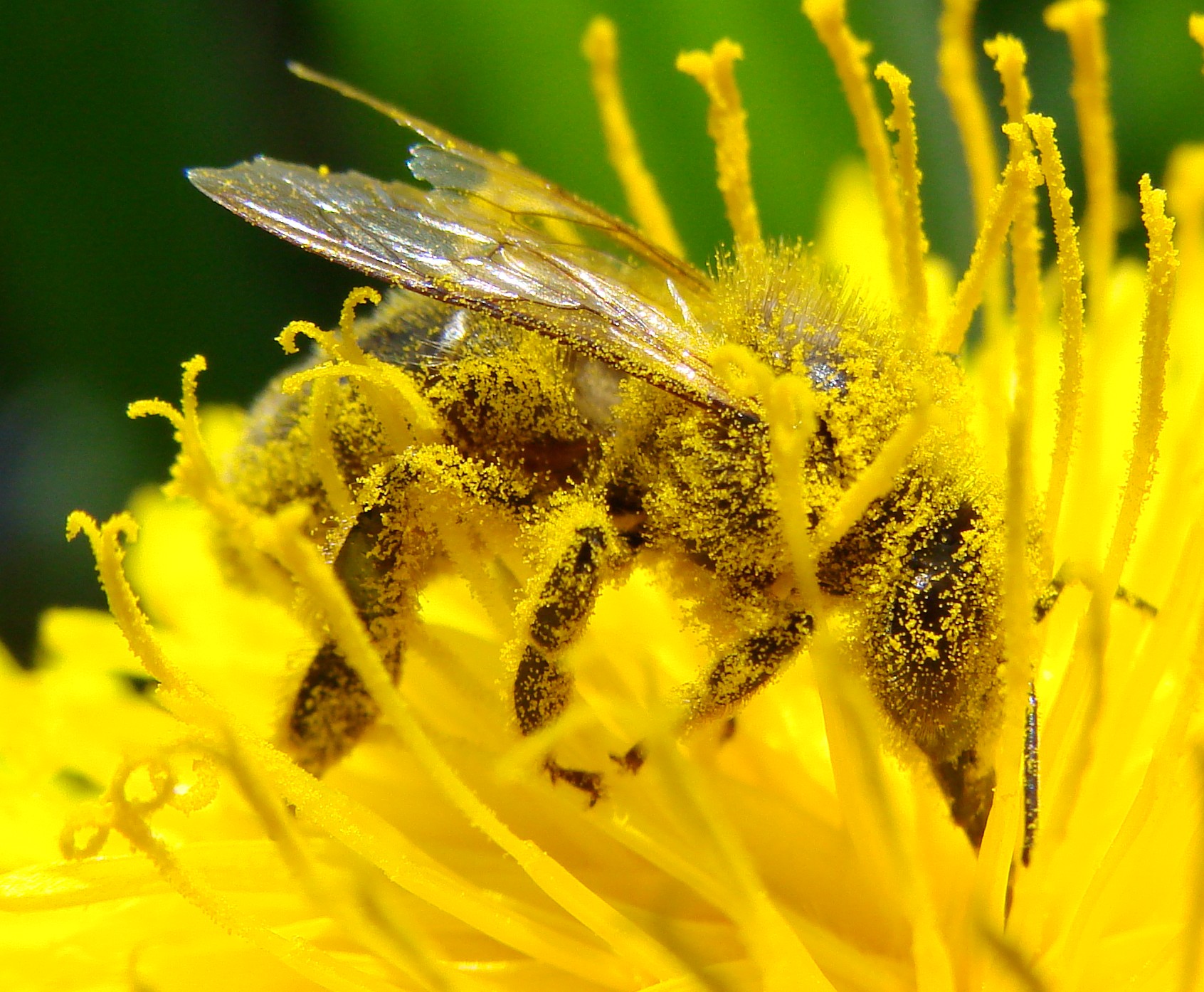
Recently, there was a development in the micro drone world with scientists being able to genetically modify dragonflies in order to control them. This drew a parallel with an episode of the hit show “Black Mirror” where tiny drones were being used to kill people. Now, researchers in Japan are creating mini drones that can act as pollinators in place of the diminishing bee population. Interestingly, this is also the pretense used for the drones’ deployment in the show.
The discovery actually stemmed from a mistake when Eijiro Miyako created a viscous substance back in 2007, Eurakalert notes. Miyako is a National Institute of Advanced Industrial Science and Technology (AIST) Nanomaterial Research Institute chemist and in 2007, he tried to create substances that would have electrically conductive properties.
One of the substances he ended up creating would later become the keystone for this mini-drone project, but at the time, he put it away thinking that it was a failure. Surprisingly, it didn’t degrade by the time Miyako checked it 8 years later. At this point, concerns about the decimation of honeybee populations were on the rise. This inspired him to use the gel in a test to see if it can be used as an artificial means of pollination.
The test results were promising, but there was still the matter of an effective vector. The subjects at that point were ants and they could hardly be good replacements for honeybees. In a stroke of genius, Miyako decided to make use of drones and the results were encouraging.
With a few modifications, such as giving the surface of the drone the same bristly characteristics that bees have, they were able to grab pollens much more effectively. This then allowed the researchers to spread pollen to other flowers via remote control, Futurism reports. According to Miyako, this could have a significant impact on agriculture and bring balance to ecosystems.