


 Boeing Wins $20 Billion Navy F/A-XX Stealth Fighter Contract
  Michael Saylor Sees Strategy, Strive Expanding Bitcoin Credit Market
  QNT Whales Move $10M to Exchanges After 400% Rally
  TD Cowen Starts SpaceX at Buy, Sees AI Compute Driving Growth
  Grayscale Sees Zcash Gaining Market Share Against Bitcoin
  Aztec Revives zk.money for Private Ethereum Payments
  Goldman Sachs Private Credit Fund Sees Redemptions Ease in Q3
  BlackRock Sees AI Agents Fueling New Crypto Demand
  Lindt Slashes 2026 Sales Growth Forecast as European Demand Weakens
  Robinhood Chain Meme Coins Slide as Stock Token Locks Rise
  Ripple and Cardano Expand Blockchain Adoption in Brazil
  Coinbase, Visa Back Open USD Stablecoin Launch
  Morgan Stanley Launches Digital Asset Lab for Stablecoins and Tokenization
  DeepSeek, Huawei Partner on Ascend AI Chip Programming Tools
  OpenAI Seeks $30 Billion at $1.4 Trillion Valuation
  Cboe Extends SPX Options Deal, Eyes Tokenized Contracts
  CNN, Politico and MS NOW Seek Court Order Blocking Trump White House Ban


 Add as a preferred source on Google
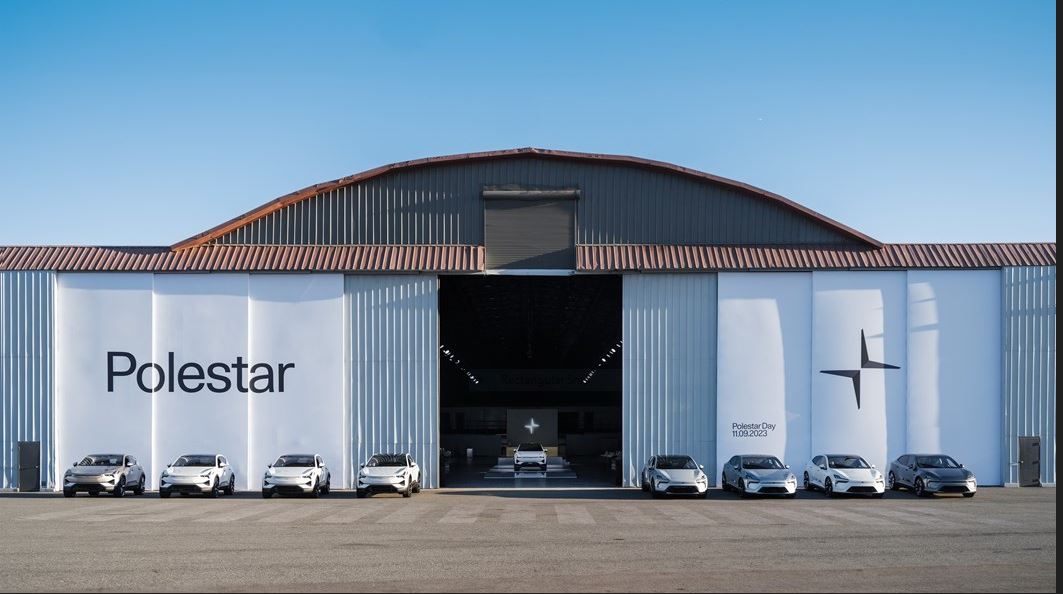
Renault Korea has announced its plans to manufacture the upcoming electric vehicle, Polestar 4, at its plant in Busan starting in 2025. This collaboration between Renault Group and China's Geely Group has evolved from joint vehicle development to production.
The French automaker's Korean unit confirmed the production of the pure electric SUV by the second half of 2025 following an agreement reached between Polestar, Geely Holding, and Renault Korea, as per Korea Times.
Polestar 4 Production and Shareholding Strategy
Polestar, a joint venture between Geely and Volvo Cars that specializes in EVs, revealed that the Polestar 4 will be manufactured in China for the Chinese market. Meanwhile, the vehicles produced in Busan will be sold in both the Korean and North American markets, according to a press release by the Renault Group.
Renault Korea's Busan plant, employing around 2,000 workers, is strategically located near a port, facilitating the export of EVs. Remarkably, it is recognized as one of Renault's top-performing factories worldwide in terms of quality.
With Geely acquiring a 34.02 percent stake in Renault Korea last year, the cooperation between the two companies has flourished. In addition to the production of the Polestar 4, Renault Korea has plans to manufacture its hybrid electric SUV next year, based on a platform jointly developed by Volvo and Geely.
This collaborative endeavor signifies Renault Korea Motors' rejuvenation and ambitious vision for the future. The CEO of Renault Korea, Stephane Deblaise, expressed his gratitude to the Polestar brand for their trust and emphasized the potential for further opportunities with the strong shareholders, Renault Group and Geely Group.
The Next Step in Manufacturing Footprint
Polestar CEO, Thomas Ingenlath, expressed his satisfaction in diversifying the manufacturing footprint in partnership with Geely Holding and Renault Korea Motors. He commended Renault Korea for sharing their focus on quality and sustainability. This collaboration not only marks a significant milestone for the Busan plant but also reinforces the commitment to producing cutting-edge electric vehicles.
Renault Korea's Busan plant boasts a maximum annual production capacity of 300,000 units, although it has operated below this threshold for the past three years, with a production count of less than 200,000 units. Last year, the plant's production capacity increased with the introduction of the hybrid XM3. However, the specific production scale for the Polestar EV, scheduled for production in 2025, has not yet been disclosed.
Photo: Polestar Media Newsroom







