


 Dollar Near 18-Month High as Euro, Yen and Pound Weaken
  Gold Prices Rise as Hormuz Tensions Fuel Inflation Risks
  Best Gold Stocks to Buy Now: AABB, GOLD, GDX
  Asian Currencies Steady as Dollar Eyes Fourth Weekly Gain
  US Dollar Hits 18-Month High as Fed Signals More Rate Hikes
  Oil Prices Trim Gains After Trump Rules Out Iran Strikes Before Midterms
  Wall Street Falls as Fed Minutes Signal Another Rate Hike
  France to Release 10 Million Barrels of Diesel to Ease Fuel Prices
  Oil Prices Rise as Hormuz Risks Offset IEA Stock Release
  US, EU Push for Action Against Asia’s Excess Factory Capacity


 Add as a preferred source on Google
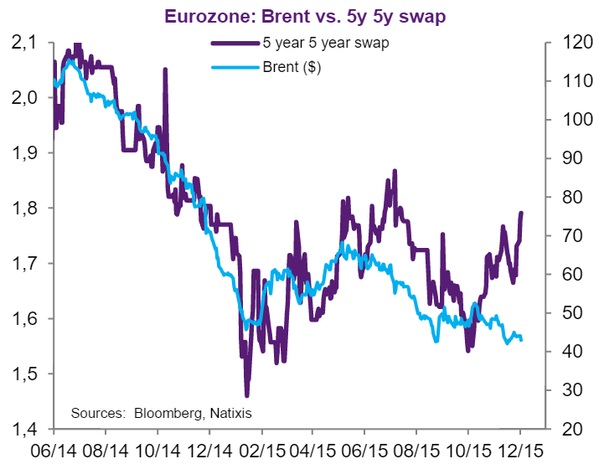
European Central Bank's (ECB) president Mario Draghi, at yesterday's conference cited one of the key argument that stand out against providing larger stimulus has been arguments of hawks that lower oil price has been behind lower headline inflation and pointed that recent decoupling of inflation expectations and oil price could be an indication of end to that.
The figure, from Natixixis, shows that inflation expectation has decoupled since October this year.
Since oil has dropped almost 60%, in just a span of a year, its effect on inflation has been much greater this year. While it is expected to exert its impact over next year too, it will fade due to the base effect. Since consumption has risen sharply, the decoupling might also be pointing to lower impact of oil over inflation.
Nevertheless, it is important to note that this decoupling began in October, when ECB promised more stimulus. So it would be vital to watch out for clues weather its coupling again after yesterday's punitive move.







