


 RBA Hikes Interest Rate to 4.60% as Inflation Risks Rise
  Bitcoin Outflows From Binance Hit Three-Year High as Whales Accumulate
  Cardano Price Eyes $0.30 as ADA Whale Activity Surges
  ECB May Stop Rate Hikes After December, Capital Economics Says
  BOJ Signals Faster Rate Hikes as Inflation Risks Grow
  Bitcoin Price Falls Below $83K as Liquidations Hit $697M
  RBI Raises Repo Rate to 5.50% in Hawkish Shift on Inflation Risks
  Fed’s Hammack Says More Data Needed Before Next Rate Move
  Yen Sinks as BOJ Rate Hike Fails to Impress Markets
  Circle Stock Falls 4% as Crypto Selloff Overshadows SAP Pay Expansion
  Ethereum Price Drops Below $2,600 as Long Liquidations Hit 4-Month High
  Strategy’s STRC Nears $100, Raising Prospects for Major Bitcoin Buys
  DogecoinVM Makes DOGE Transactions 300x Faster
  Zcash Privacy Demand Rises as AI Exposes Bitcoin Transactions


 Add as a preferred source on Google
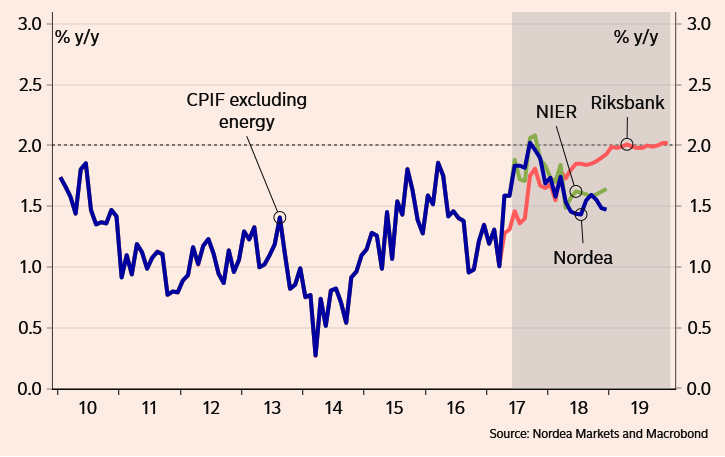
Riksbank (Sweden's central bank) meets on July 4th to decide monetary policy and we believe there is unlikely to be any change in either interest rates or forward guidance. The Riksbank is likely to look through strong Swedish economy. The tone of the statement is likely to be more relaxed as inflation has been higher than expected.
Data released earlier today showed that Sweden's foreign trade balance turned to a surplus in May from a deficit in the previous year, as exports grew faster than imports. The trade surplus came in at SEK 2.8 billion in May versus a deficit of SEK 3.6 billion in the corresponding month last year. In April, the trade balance showed a shortfall of SEK 3.2 billion. The value of exports surged 18.0 percent year-over-year in May and imports climbed by 11.0 percent.
The lower-than-expected Q1 GDP growth may not be a concern as resource utilisation is still at a high level, which is a condition for increasing inflation according to the Riksbank. Sweden's CPIF gauge of inflation came in at 1.9 percent year-on-year in May, as compared with the Riksbank’s projection of 1.7 percent and consensus expectations of 1.8 percent. The central bank has been struggling to keep inflation around its 2 percent target level in recent months, encouraging it to reiterate its commitment to negative interest rates and quantitative easing.
A turnaround in the central bank’s monetary policy stance is still a long way off as currency moves can have a big impact on inflation in the trade-dependent Swedish economy. The Riksbank fears that tightening before the ECB would lead to a strong appreciation of the krona, hurting exports while making imports cheaper and dragging inflation down. Moreover, the ECB has also signalled that it is less likely to step on the accelerator again.
"We expect the Riksbank to stay sidelined at the meeting in July. The monetary policy tool box will be left untouched and it seems unlikely that the interest rate path will be altered. We see the first rate hike in the autumn 2018 and a negative repo rate of -0.25% by December 2018," said Nordea Bank in a report.
EUR/SEK remains largely range bound between 9.80 and 0.97 since the beginning of the month. The pair has largely been on a rising trend since Feb 2017. Technical studies point to further upside. Immediate support is seen at 50-DMA at 9.70, while 9.8239 (61.8% Fib retrace of 10.0804 to 9.40900) is immediate resistance.
FxWirePro's Hourly EUR Spot Index was at 145.538 (Bullish) at 1220 GMT. For more details on FxWirePro's Currency Strength Index, visit http://www.fxwirepro.com/currencyindex.
FxWirePro launches Absolute Return Managed Program. For more details, visit http://www.fxwirepro.com/invest







