


 ICE to Complete Nationwide Body Camera Rollout by End of August
  Trump Administration Moves to Strip ABA of Law School Accreditor Status
  Trump Escalates Canada Trade War With 50% Tariffs
  Iran Condemns New US Sanctions as Hormuz Standoff Deepens
  Qatar Pushes Iran Diplomacy as Trump Rules Out Talks
  New Zealand Moves to Ban Social Media for Children Under 16
  Carney’s Trump Tariff Pushback Wins Canadian Support, but Economic Risks Mount
  Nepal Declines Foreign Rescue Aid After Deadly Flash Flood
  HP Stock Drops 9% Despite Q3 Earnings Beat and Raised 2026 Outlook
  New Zealand Labour Backs Social Media Ban for Under-16s
  Norway’s King Harald Dies at 89, Haakon VIII Takes Throne
  Google Expands Gemini Enterprise With AI Tools for Legal Sector
  Trump Signs Order to Cut Routine Childhood Vaccines
  Pentagon Eyes U.S. Troop Cuts in Europe Amid NATO Review
  FCC Steps Up China Tech Crackdown as Beijing Pushes Back
  Mojtaba Khamenei’s Absence Fuels Iran Leadership Doubts
  34 Australians Missing After Deadly Nepal Floods


 Add as a preferred source on Google
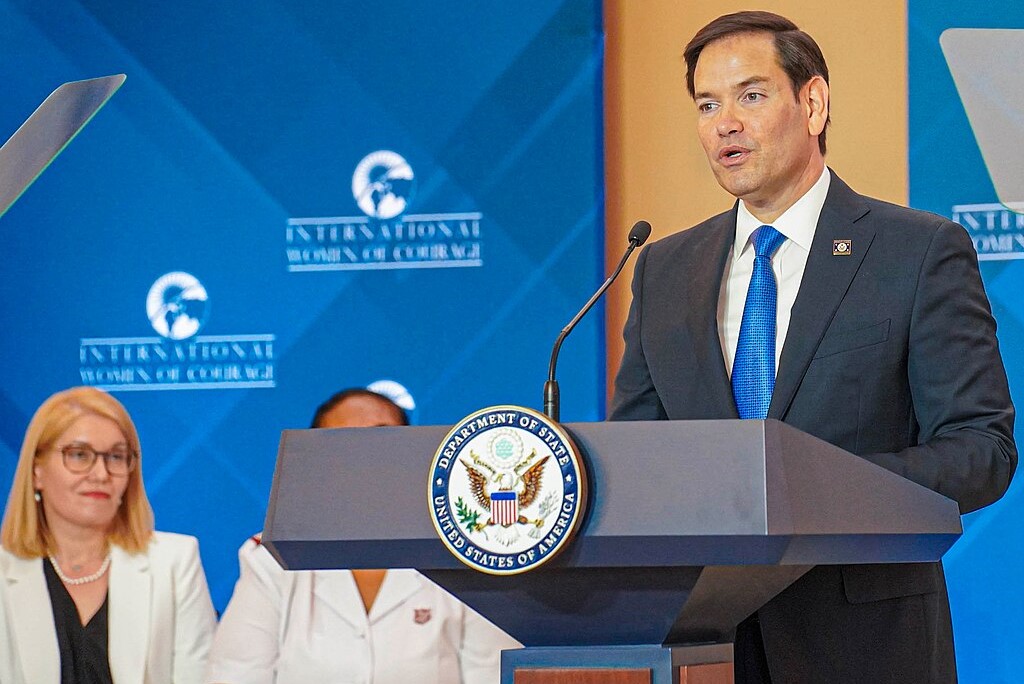
Secretary of State Marco Rubio has instructed American diplomats to leverage social media platform X and collaborate with Pentagon psychological operations units as part of a broader strategy to combat foreign anti-American propaganda. The directive, outlined in a cable reviewed by Reuters and first reported by The Guardian, targets foreign influence campaigns that threaten U.S. national security and stoke hostility toward American interests abroad.
The cable calls on diplomats to coordinate with the Pentagon's Psychological Operations division, formerly known as Military Information Support Operations (MISO). Historically, MISO has focused on influencing enemy combatants during active conflicts. One of its most notable efforts involved dropping graphic anti-ISIS leaflets over Syrian territory in 2015. However, the unit's involvement in civilian-facing information campaigns has drawn controversy. During the first Trump administration, Pentagon psyops teams ran covert social media accounts to undermine confidence in China's COVID-19 vaccine — a move that clashed with State Department officials at the time.
Rubio's directive also encourages diplomats to utilize X's crowdsourced "Community Notes" feature, along with unspecified artificial intelligence tools, to surface credible information and flag disinformation. The recommendation to rely on Elon Musk's platform has raised eyebrows, given that X has faced persistent criticism for enabling the spread of false information after Musk dramatically scaled back the platform's content moderation teams following his 2022 acquisition of Twitter. Musk and X maintain that community-driven moderation better preserves free expression.
The political dimensions are hard to ignore. Musk is a prominent Trump ally, and his platform has become a hub for pro-Trump voices online. Adding complexity, xAI was recently folded under SpaceX, placing a major defense contractor and a key social media outlet under unified ownership — a convergence that raises fresh questions about the boundaries between private tech influence and U.S. government information operations.







