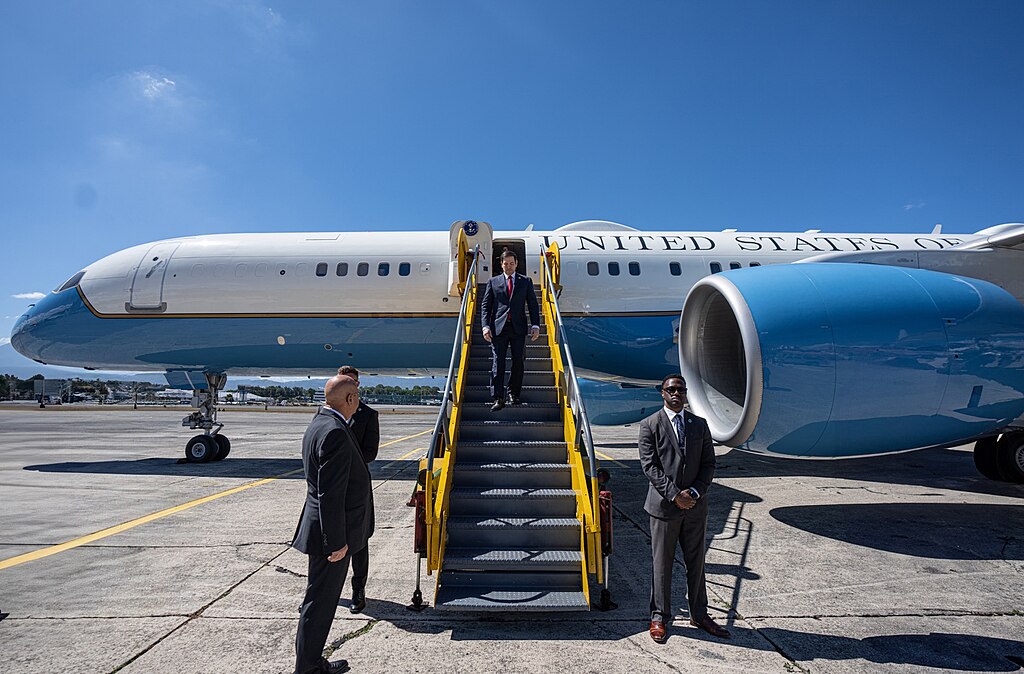
U.S. Secretary of State Marco Rubio arrived in Kuala Lumpur on Thursday for his first Asia tour, aiming to reaffirm America's commitment to the Indo-Pacific despite President Trump’s escalating global tariff offensive. Rubio will meet officials from the 10-member ASEAN bloc and senior Malaysian leaders during the ASEAN Foreign Ministers’ meeting.
His visit comes as President Trump prepares to impose steep tariffs on six ASEAN nations—Malaysia, Indonesia, Cambodia, Thailand, Laos, and Myanmar—as well as key allies Japan and South Korea. The move has raised concerns across the region, with many questioning Washington’s diplomatic and economic reliability under the “America First” policy.
Rubio, who also serves as national security adviser, seeks to reassure Southeast Asian partners of continued U.S. engagement, particularly amid growing Chinese influence. According to a senior State Department official, key topics include regional security, the South China Sea, transnational crime, and human trafficking.
Experts view the visit as a delayed but strategic effort to counterbalance China’s growing presence. Victor Cha of the Center for Strategic and International Studies noted the timing was “better late than never.”
Trump’s tariff hikes have added to regional unease. Japan and South Korea face a 25% tariff, while Australia expressed concern over a potential 200% levy on pharmaceutical imports. Only Vietnam has secured a revised deal, lowering its tariff from 46% to 20%.
A draft ASEAN communique, seen by Reuters, voiced concern over “rising global trade tensions,” calling unilateral tariffs counterproductive to global economic stability.
Rubio is expected to address trade concerns and emphasize the need to rebalance trade relationships. Despite growing skepticism, the U.S. aims to present itself as a more stable and strategic partner than China in the rapidly evolving Indo-Pacific landscape.