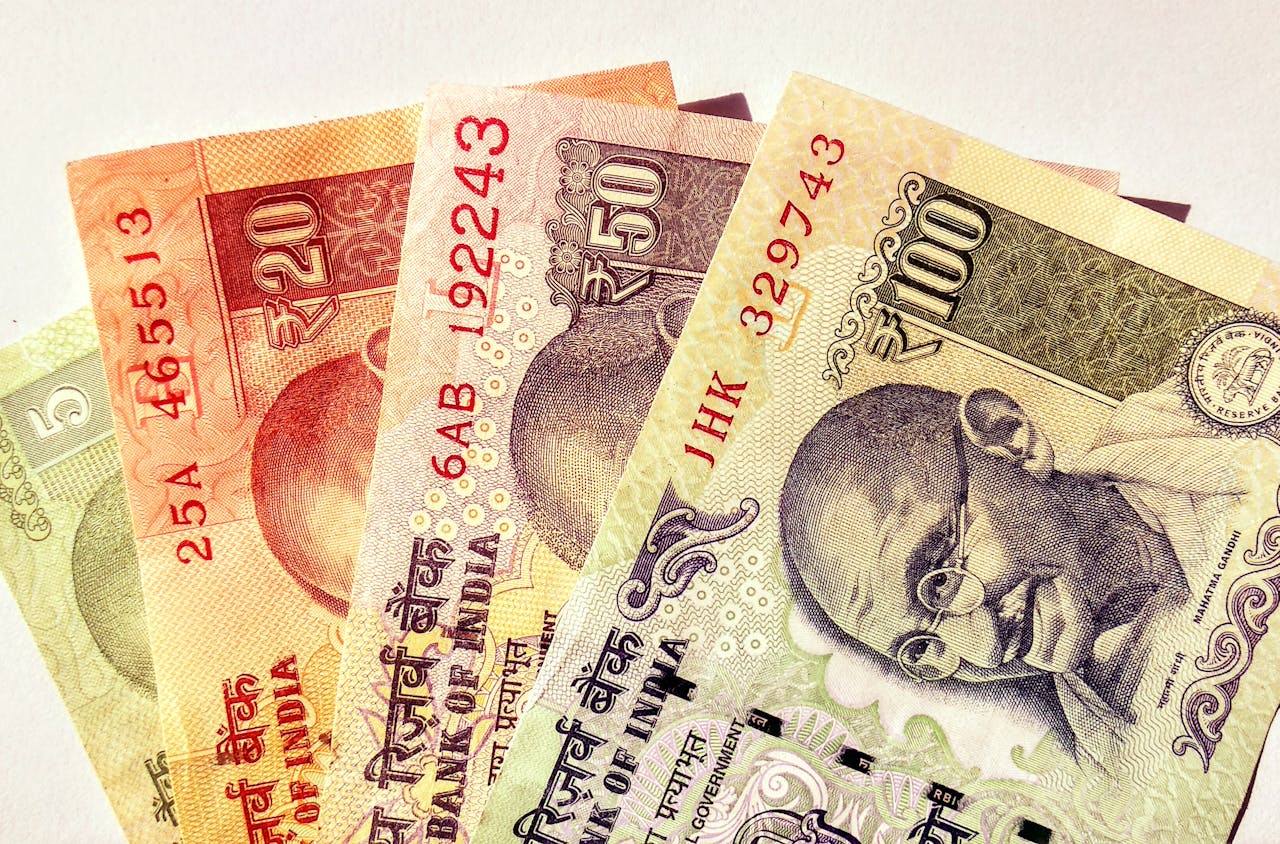
The Indian rupee is expected to remain under pressure this week as steep U.S. tariffs on Indian exports and the Reserve Bank of India’s (RBI) upcoming policy decision weigh on sentiment. The rupee closed at 87.54 per U.S. dollar on Friday, down 1.2% for the week, marking its weakest level since February. Persistent foreign portfolio outflows and a 25% levy on Indian exports have added to the decline, while fresh U.S. tariff announcements on dozens of trading partners pushed other Asian currencies to multi-month lows.
The U.S. dollar index recorded its strongest weekly gain since 2022 as expectations for a September Fed rate cut faded. However, weaker-than-expected U.S. jobs data and a rise in unemployment to 4.2% revived market bets, with odds of a cut now at 80%.
Investors are also eyeing the maturity of a $5 billion RBI dollar-rupee swap on Monday. Analysts, including Alok Singh of CSB Bank, expect the RBI to manage liquidity without excessive volatility, with the rupee likely to trade between 87.00 and 87.80.
India’s 10-year benchmark bond yield ended last week at 6.368%, up 2 bps, and is expected to stay within 6.33%–6.38% until Wednesday’s policy decision. While some anticipate a 25-bps cut due to June’s six-year-low retail inflation and expectations of a further drop in July, most economists expect no change after the RBI’s surprise 50-bps cut in June and its shift to a neutral stance.
Key upcoming events include India’s July HSBC services PMI and composite PMI on August 5, and the RBI policy decision on August 6. U.S. data releases this week—covering factory orders, trade figures, and PMIs—could also influence market sentiment and currency movements.