
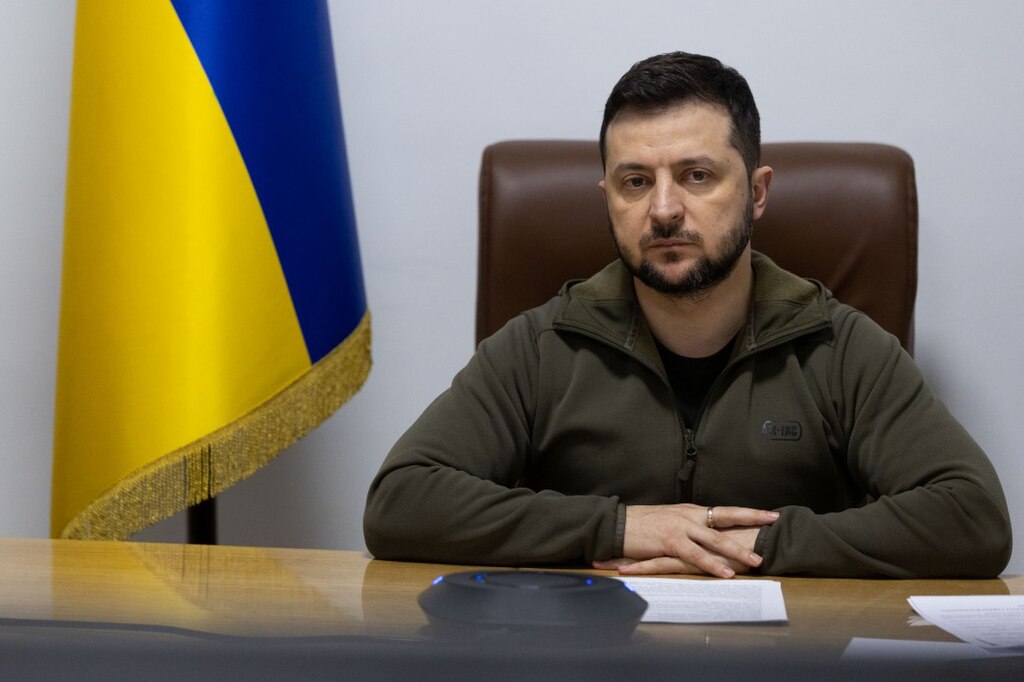
Russia carried out one of its largest daytime drone attacks on Ukraine on Wednesday, targeting critical infrastructure across western regions and killing at least six people. Ukrainian officials said Moscow launched around 800 drones overnight, marking the first major assault since a temporary U.S.-brokered ceasefire between Russia and Ukraine ended earlier this week.
Ukrainian President Volodymyr Zelenskiy said the strikes were deliberately aimed at areas close to NATO borders, raising security concerns across Eastern Europe. Poland responded by scrambling fighter jets as a precaution during the Russian air assault. Zelenskiy also noted that the timing of the attack coincided with the U.S. president’s visit to China, suggesting the escalation was intentional.
The attacks damaged key railway infrastructure, with Ukrainian authorities reporting 23 separate strikes on rail facilities. Despite the destruction, train operations continued. Heavy fighting was also reported along the eastern front line near Pokrovsk and Huliaipole, where Russian forces intensified ground assaults supported by guided bombs and air strikes.
Hungary’s newly elected government strongly condemned the attacks, particularly those affecting regions with ethnic Hungarian communities. Prime Minister Peter Magyar announced that Hungary summoned the Russian ambassador and demanded answers regarding an end to the war. Zelenskiy praised Hungary’s reaction, calling it an “important message.” Slovakia also tightened border security with Ukraine following the strikes.
Ukraine’s air force claimed Russia used Belarusian and Moldovan airspace routes to direct drones into western Ukraine. Moldova later confirmed that a drone briefly crossed into its airspace, describing the incident as a threat to national security.
Russian strikes also hit energy facilities operated by Naftogaz in Kharkiv and Zhytomyr. Several western Ukrainian cities, including Rivne and Ivano-Frankivsk, suffered casualties and power outages. Ukrainian intelligence warned that the drone barrage was designed to overwhelm air defenses ahead of additional missile attacks.


