


 Brazil Election: Lula and Bolsonaro Rally Ahead of October 25 Runoff
  US, EU Push for Action Against Asia’s Excess Factory Capacity
  Pakistan Declares Emergency in Khyber Pakhtunkhwa, Suspends Imran Khan’s PTI Government
  Trump Sanctions International Criminal Court, Sparking EU Backlash
  Panama Declares Emergency After 7.7 Earthquake Triggers 200 Aftershocks
  US Judge Blocks Trump Administration’s Taxpayer-Funded Political Ads
  Flydubai Co-Pilot Planned Suicide Attack on Israel Airport, UAE Says
  Trump Cancels Alabama Football Trip as Hurricane Isaias Approaches
  Trump Secures Russian Diesel Deal as US Fuel Prices Surge
  Trump Announces Russia-Ukraine Energy Ceasefire as Zelenskiy Awaits Details
  Mahmoud Abbas Postpones Palestinian Elections to September 2027
  JD Vance Questions Pentagon Plan to Livestream Fort Hood Shooter’s Execution
  Russian Strikes Kill Six in Ukraine, Including Three in Kharkiv
  Trump Buys Up to $25M in Meta Stock, Invests in SpaceX Debt
  Venezuela’s Machado Calls for Elections by July 2027
  Ripple Chairman Chris Larsen Donates $22.5 Million Ahead of US Midterms


 Add as a preferred source on Google
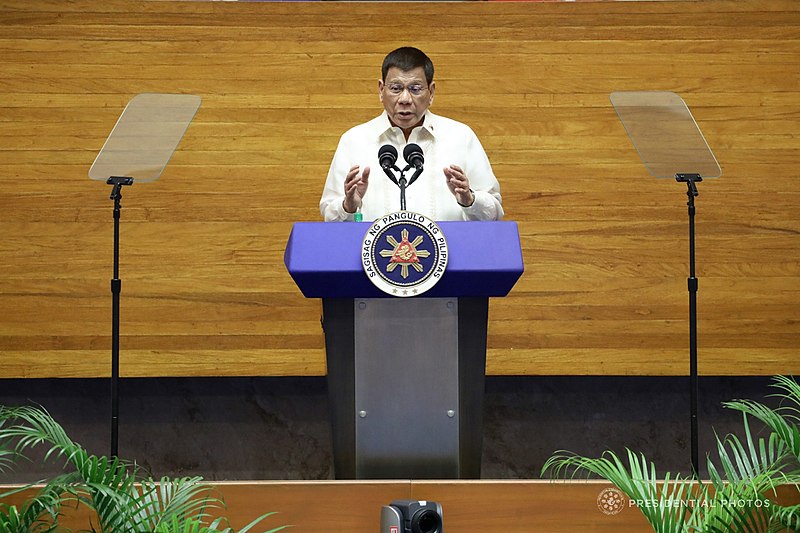
The Philippines, along with other nations in the region, have been at odds with China over jurisdiction in the South China Sea. In the latest criticism towards Beijing, the Philippines has claimed that Chinese vessels have acted unlawfully towards Philippine authorities in the disputed waters.
Manila’s foreign ministry accused China of engaging in provocation in the South China Sea, citing that several Chinese ships were acting unlawfully against Philippine authorities that were patrolling the waters over and around the country. The Department of Foreign Affairs cited the “unlawful issuance of over 200 radio challenges, sounding of sirens, and blowing of horns by Chinese government vessels” against the Philippine authorities making patrols in the waters also known as the West Philippine Sea.
“These provocative acts threaten the peace, good order, and security of the South China Sea and run contrary to China’s obligations under international law,” said the DFA. The agency did not specify when the incident took place.
Over 80 diplomatic protests have already been issued by the Philippines against China since Philippine President Rodrigo Duterte took office in 2016. Previously, the Philippines has also criticized the presence of 100 Chinese ships in the waters it has control over back in September.
China claims sweeping sovereignty over the majority of the South China Sea through its so-called “nine-dash line.” This claim has angered the surrounding nations with their respective claims over parts of the waters and was challenged in an international tribunal in 2016. The international ruling found that China’s claims over the South China Sea have no basis in international law.
China has since ignored the ruling and continues to claim sovereignty over the waters by building artificial islands and occupying islands.
Another key issue in the region also lies in China’s conflict with Taiwan with the growing fear of an invasion as tensions remain at a high. Satellite images have revealed that China has bolstered three military bases close to the island nation. This coincides with fears that China may use the three bases to carry out airstrikes against Taiwan, which has previously been reported to be in the midst of preparing for a possible conflict with Beijing.







