


 Panama Declares Emergency After 7.7 Earthquake Triggers 200 Aftershocks
  MI5 Warns of Rising Iran, Russia Threats and AI Bioweapon Risks
  US Senate Midterms 2026: Key Races That Could Flip Control
  Zelenskiy Says Ukraine Received No Warning Before Russian Missile Attack
  Trump Denies China, Russia Are Helping Iran in War
  Greenland Lawmakers Back Trump Security Deal Despite Economic Concerns
  European Auto Stocks Rise as EU-China Trade Deal Targets Hybrid Imports
  North Korea Fires Ballistic Missiles as Tensions With South Korea Escalate
  Trump Warns Houthis Over Attacks, Considers Erdogan Intervention
  Trump Announces Russia-Ukraine Energy Ceasefire as Zelenskiy Awaits Details
  Pakistan Declares Emergency in Khyber Pakhtunkhwa, Suspends Imran Khan’s PTI Government
  US Condemns China Sanctions on Taiwan Allies Belize and Paraguay
  Flavio Bolsonaro Backs Brazil’s 40-Hour Workweek Reform Ahead of Runoff
  NATO Commander Warns Russia of Devastating Response to Attack
  Mahmoud Abbas Postpones Palestinian Elections to September 2027
  US Supreme Court Denies Release of Anti-ICE Activist Kyle Wagner


 Add as a preferred source on Google
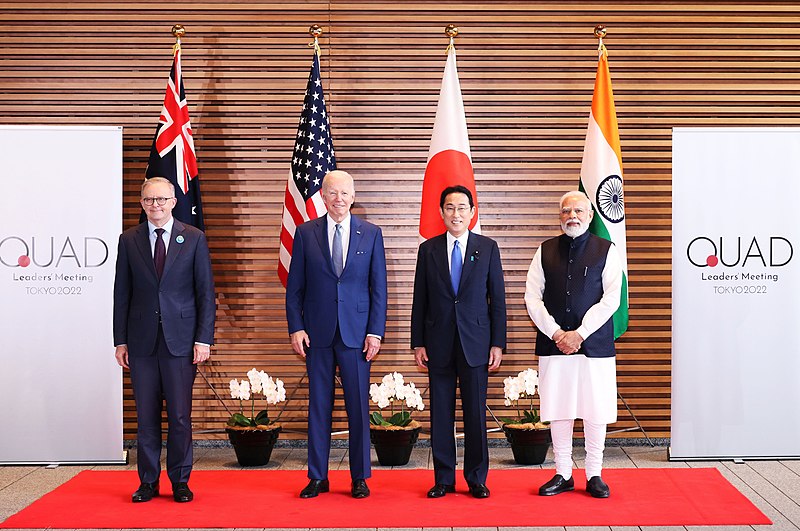
With China’s growing influence over the Indo-Pacific region, the countries that make up the Quad grouping are establishing a surveillance plan that is believed to counter China. The plan would allow countries in the region to track down illegal fishing and incursions by Chinese vessels.
The Quad grouping of nations - made up of the US, Australia, India, and Japan - announced Tuesday last week the surveillance plan for the Indo-Pacific, also known as the Indo-Pacific Partnership for Maritime Domain Awareness or IPMDA.
The IPMDA plan would help countries in the Indo-Pacific – Southeast Asian and Pacific nations, including nations in the Indian Ocean – track illegal fishing and other illegal activities in their waters in real-time.
While the alliance did not mention China directly, analysts said that the initiative would address the long-running complaints from the countries in the region about unauthorized fishing and activities by China in their waters, as well as incursions made by Chinese militia ships in the disputed South China Sea.
A US official told the Financial Times that the grouping plans to fund commercial satellite tracking services to provide maritime intelligence to Indo-Pacific countries for free.
In monitoring radio frequencies and signals, the plan would also help countries monitor boats even when they try to avoid detection by turning off transponders. The intelligence would then be shared across a network of regional surveillance centers in India, Singapore, Vanuatu, and the Solomon Islands.
Chinese vessels have long been accused of unauthorized fishing at least 237 times between 2015 and 2019, according to the Environmental Justice Foundation. Several Chinese vessels have also been detained for illegal fishing or incursions in Vanuatu, Palau, Malaysia, and South Korea in recent years. Hundreds of Chinese boats were also discovered fishing for squid in North Korean waters.
Back in January, the US State Department established a report refuting China’s claims to the majority of the South China Sea, deeming its activities in the body of water as a grave undermining of the rule of law in the oceans and in all provisions of international law that are universally-recognized.
The overall effect of China’s claims over the body of water, according to the report, is that Beijing “unlawfully claims sovereignty or some form of exclusive jurisdiction over most of the South China Sea.” The report also noted that Beijing has not provided evidence that can justify its so-called “historic” claims over the waters.







