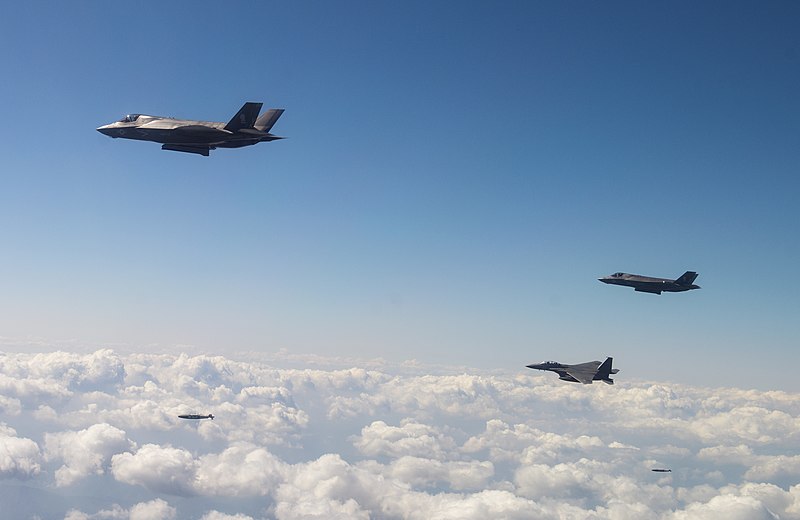
The South Korean military was forced to scramble its jets following a transit that took place in its air defense zone. The jets were scrambled when Chinese and Russian warplanes were identified to have entered the country’s air defense zone.
Seoul’s Joint Chiefs of Staff said Wednesday that two Chinese and six Russian jets entered its air defense zone. Two Chinese H-6 bombers repeatedly entered and left the Korea Air Defense Identification Zone off the southern and northeastern coasts of South Korea. The planes entered the country’s air defense zone from the Sea of Japan or the East Sea, hours after the initial incursions with the Russian TU-95 bombers and SU-35 jets, leaving after 18 minutes.
The JCS noted that the planes did not breach South Korea’s airspace.
“Our military dispatched air force fighter jets ahead of the Chinese and Russian aircraft’s entry of the KADIZ to implement tactical measures in preparation for a potential contingency,” said the JCS in a statement.
Russia does not recognize South Korea’s air defense zone, and China said the zone is not territorial airspace and that countries should exercise their freedom of movement in the air. The Japanese Air Self-Defense Force was also prompted to scramble fighter jets after the Chinese bombers entered the airspace of the Sea of Japan from the East China Sea, according to the Japanese defense ministry.
China and Russia previously said that their aircraft were conducting joint exercises.
The transit follows another entry back in August when the JCS identified Russian warplanes entering the KADIZ, three months after Chinese and Russian jets entered the air defense zone back in May for the first time since President Yoon Suk-yeol took office.
Seoul is also currently facing a trucker strike after the South Korean government failed to make progress with truck drivers who defied the order to return to work amidst concerns about fuel shortage and increased prices of groceries. Officials from the South Korean transport ministry said that the government’s stance would not change.
The governing People Power Party told the union that represented 25,000 striking truck drivers that they must return to work before lawmakers decide on a bill on demands.