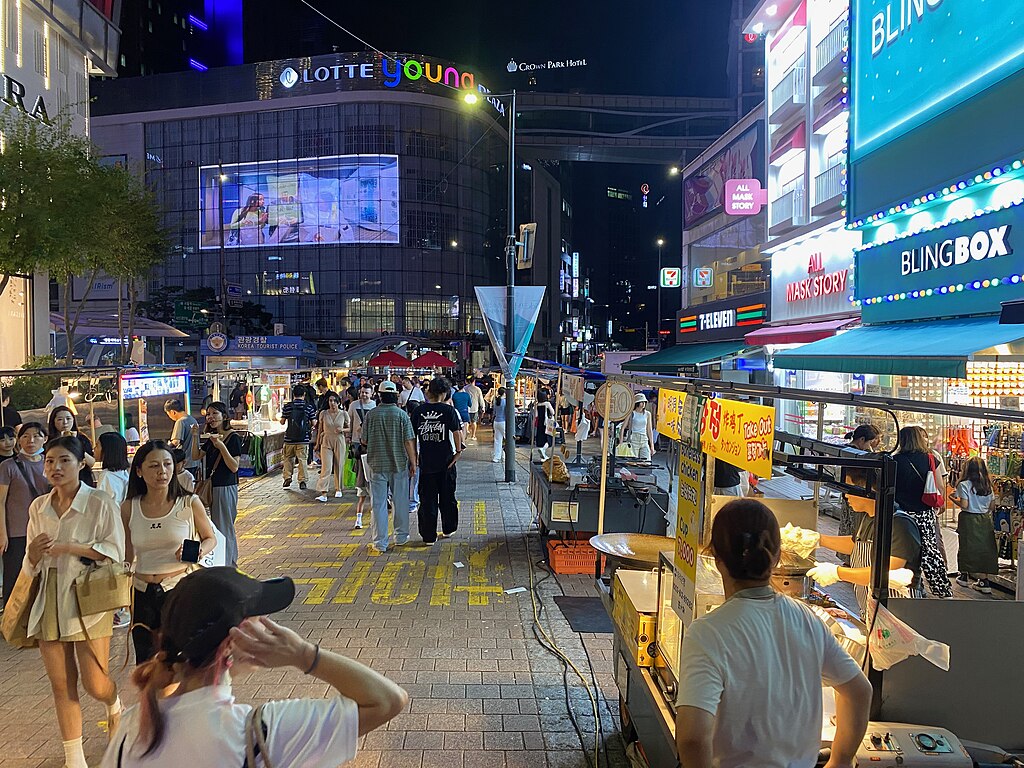
South Korea’s economy recorded an unexpected contraction in the final quarter of 2025, marking its sharpest quarterly decline in three years and raising concerns about the country’s near-term growth outlook. According to advanced estimates released by the central bank on Thursday, gross domestic product (GDP) fell 0.3% in the October–December period compared with the previous quarter on a seasonally adjusted basis. This result sharply contrasted with market expectations, as economists surveyed by Reuters had forecast a modest 0.1% expansion.
The contraction followed a strong 1.3% expansion in the third quarter, highlighting the volatility facing Asia’s fourth-largest economy. The fourth-quarter decline was the steepest since the final quarter of 2022, driven largely by weakness in investment-related sectors. Construction investment emerged as the biggest drag on economic growth, plunging 3.9% during the quarter, while facility investment also declined by 1.8%, reflecting subdued business confidence and slower capital spending.
Private consumption provided limited support, rising just 0.3% after a stronger 1.3% increase in the previous quarter that had been boosted by the government’s supplementary budget. External trade also weighed on growth, as exports fell 2.1% and imports dropped 1.7%. As a result, net exports made a negative contribution of 0.2 percentage points to overall GDP, underscoring the impact of weaker global demand.
On a year-on-year basis, South Korea’s GDP grew 1.5% in the fourth quarter, easing from a 1.8% increase in the third quarter and missing economists’ median forecast of 1.9%. For the full year, the economy expanded by 1.0% in 2025, down sharply from 2.0% growth in 2024 and marking the slowest annual expansion since 2020.
The Bank of Korea recently signaled an end to its current easing cycle, opting to keep interest rates unchanged as it prioritizes foreign exchange stability and acknowledges potential upside risks to growth this year. Looking ahead, the central bank projects economic growth of 1.8% in 2026, while the government remains more optimistic, forecasting stronger growth of 2.0% this year despite recent economic headwinds.