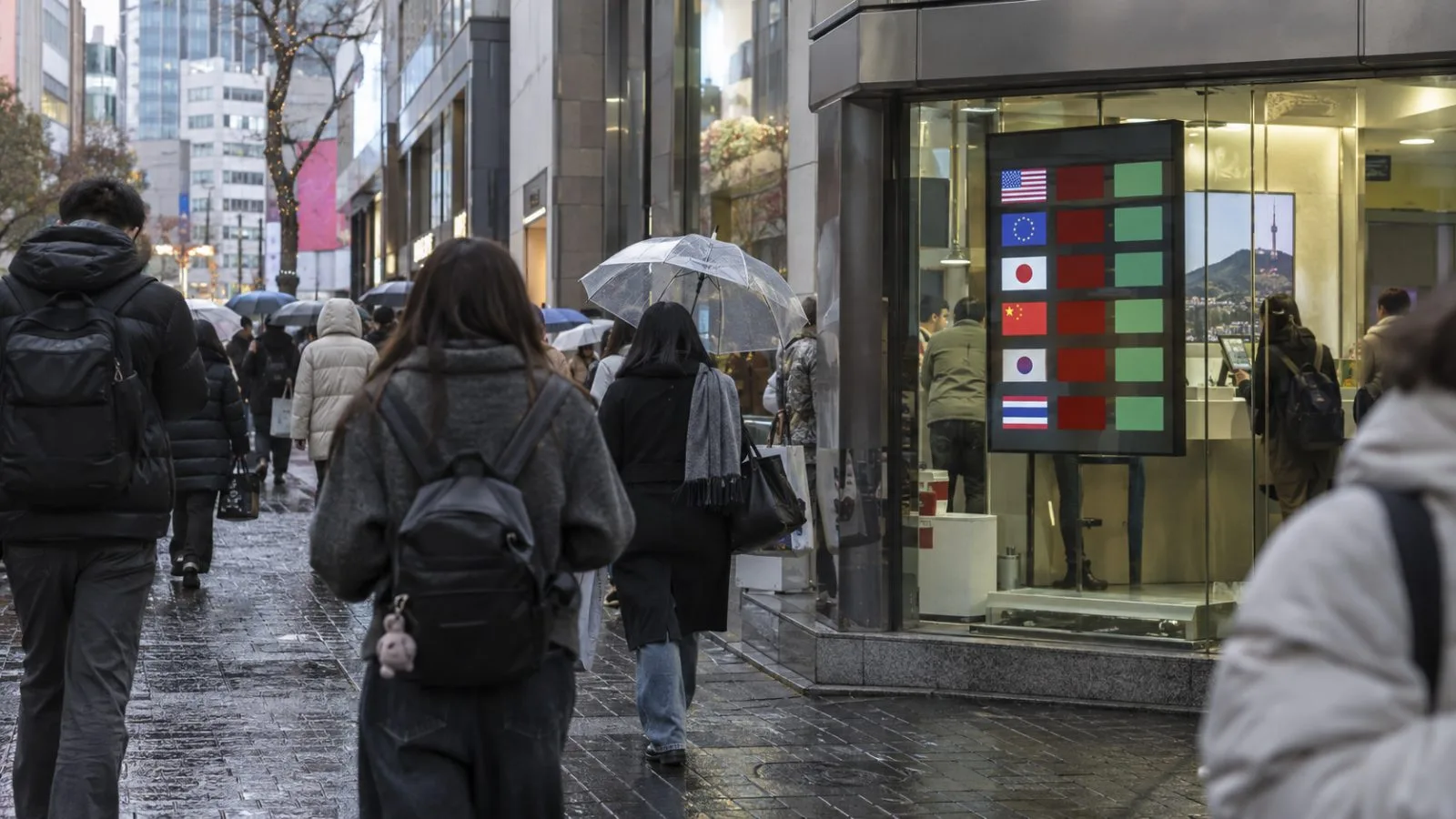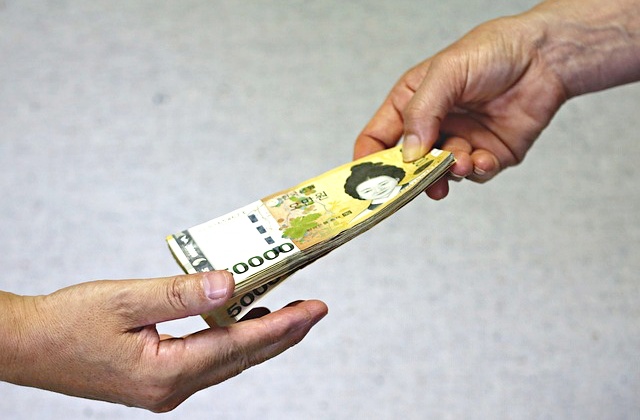
South Korea’s won weakened on the first trading day of the year, slipping against the U.S. dollar despite renewed commitments from monetary and fiscal authorities to stabilize foreign exchange markets. The move highlights ongoing pressure on the local currency, which has recently traded in the high-1,400 range amid global dollar strength and capital flow concerns.
In his New Year address, Bank of Korea Governor Rhee Chang-yong stressed that the current dollar-won exchange rate does not accurately reflect South Korea’s economic fundamentals. He suggested that the won is excessively weak, noting that while it is difficult to define a precise fair value, levels above 1,400 won per dollar appear significantly misaligned with underlying economic conditions. His comments were widely interpreted as a strong verbal intervention aimed at calming market sentiment.
Governor Rhee also emphasized that the central bank would closely coordinate with the government on policies related to U.S.-bound investments under a recently finalized bilateral trade deal with Washington. He warned that investments that could undermine foreign exchange stability would not be supported and called on the National Pension Service to reassess its overseas investment strategy to reduce pressure on the spot dollar-won market.
Despite these measures, the won fell 0.26% to 1,443.2 per dollar in early Friday trading. Over recent weeks, the currency has been edging closer to the psychologically important 1,500 level, prompting authorities to introduce tax incentives aimed at attracting foreign capital back into South Korean equities and discouraging speculative activity.
Market participants have noted that the National Pension Service has been selling dollars to support the won, aligning with the government’s broader push to stabilize the currency. Analysts say policymakers appear keen to guide the exchange rate toward more favorable levels seen late last year. Citibank Korea economist Kim Jin-wook said authorities likely prefer the lower average rate recorded on December 30, when the won strengthened to around 1,439.5.
Looking ahead, Citibank forecasts the dollar-won exchange rate to stabilize near 1,450 in the next three months and around 1,430 over the following six to twelve months. Meanwhile, South Korea’s $350 billion U.S. investment pledge is expected to be funded largely through the repatriation of foreign currency assets, with annual outflows capped at $20 billion to limit negative impacts on the won.