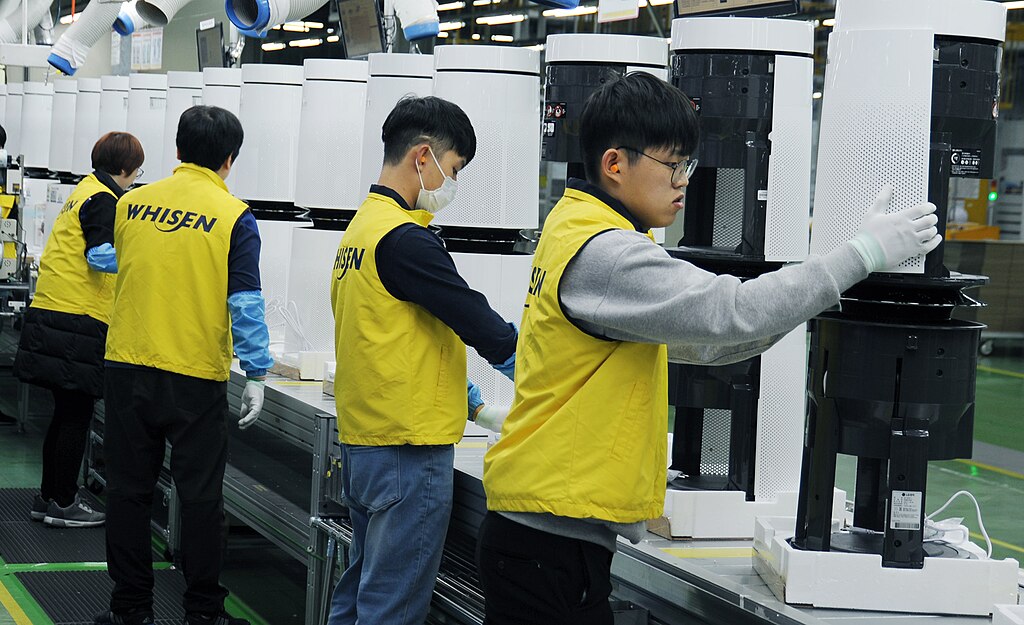
South Korea’s industrial production declined in January, highlighting growing economic uncertainty fueled by U.S. tariffs and global trade tensions. According to government data released Tuesday, factory output fell 2.3% month-on-month, reversing December’s 3.9% gain. The decline was smaller than the 3.1% drop predicted in a Reuters poll.
Electronics and semiconductor-related industries were hit hard. Production of electronic components, including display panels, plunged 8.1%, while semiconductor assembly machinery dropped 7.7%. The all-industry production index also fell 2.7%, with services sector output slipping 0.9%.
The finance ministry attributed the weak performance to external uncertainties, fewer working days, and an unfavorable base effect. Meanwhile, facility investment plummeted 14.2% due to reduced imports of semiconductor machinery and transport equipment. Retail sales also declined by 0.6%.
Adding to concerns, U.S. President Donald Trump confirmed that 25% tariffs on Canada and Mexico would take effect Tuesday, with reciprocal tariffs beginning April 2. Although the U.S.-Korea Free Trade Agreement (FTA) exempts many goods, Trump’s global steel and aluminum tariffs could impact South Korea’s exports.
In February, South Korea’s exports struggled, with semiconductor shipments ending a 15-month growth streak due to falling memory-chip prices.
As a key global exporter, South Korea faces mounting pressure from shifting trade policies and weakening demand, raising concerns over future economic stability.