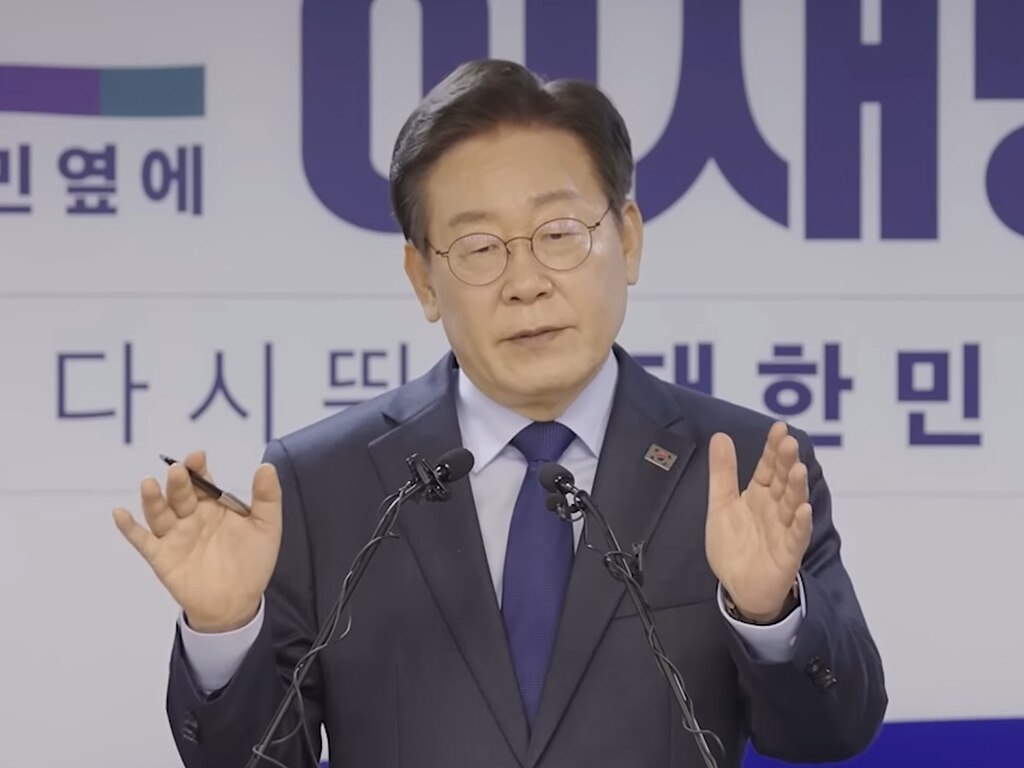
South Korean President Lee Jae Myung used his first address to the United Nations General Assembly to outline a vision for peace and stability on the Korean Peninsula. Vowing to end what he called a “vicious cycle of unnecessary military tensions,” Lee proposed a phased approach to resolving the North Korean nuclear issue while emphasizing the long-term goal of peaceful coexistence and shared growth.
Lee’s plan acknowledges that denuclearization cannot be achieved immediately and instead calls for a realistic, step-by-step process to build trust between Seoul and Pyongyang. He highlighted recent measures by South Korea, including halting propaganda leaflets and loudspeaker broadcasts near the border, as initial steps toward reducing hostilities. According to Lee, gradually expanding inter-Korean cooperation and exchanges will lay the foundation for sustainable peace.
The challenge to this vision, however, comes from North Korea’s leader, Kim Jong Un. Over the weekend, Kim firmly rejected any phased denuclearization plan, labeling recent dialogue efforts from Seoul and Washington as insincere. Kim insisted that while he is open to talks with the United States, he will never abandon North Korea’s nuclear arsenal in exchange for sanctions relief, underscoring the regime’s stance that nuclear weapons are central to its survival.
Despite this, Kim struck a personal note by recalling his past meetings with former U.S. President Donald Trump, suggesting that he still values direct engagement with Washington. Trump recently expressed interest in meeting Kim again this year, though U.S. President Joe Biden omitted any reference to North Korea in his 55-minute U.N. speech on Tuesday.
Lee’s address reflects South Korea’s renewed push for dialogue and reconciliation, despite Pyongyang’s hardened position. Whether this phased approach can gain traction depends on overcoming deep mistrust and navigating the complex dynamics involving the U.S., North Korea, and regional security interests.