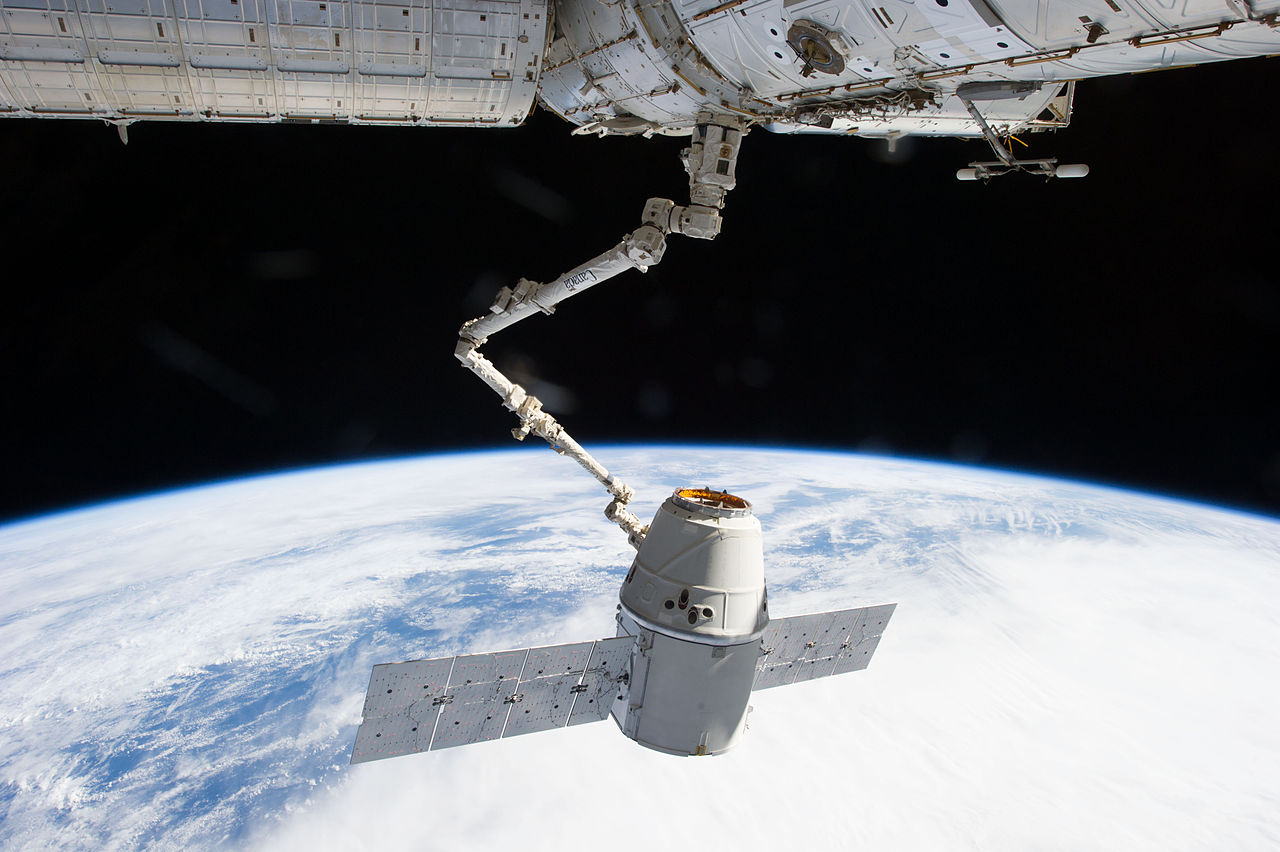
Elon Musk’s renegade private space company SpaceX once again made history by launching a reused cargo ship into space last Saturday. It carried over 6,000 pounds worth of equipment and supplies to the International Space Station. The feat is noteworthy enough that now, NASA was forced to admit that it may need the company’s help.
Called Dragon, the cargo ship by SpaceX was actually used for a similar mission back in 2014, which was to deliver 2.5 tons of cargo to the ISS, Futurism reports. That was when it was brand new. During Saturday’s launch, the same ship was sent with the exception of a few replacement parts here and there.
The successful mission was historic for the company and the space industry for two reasons. One is the fact that the ship was used during a previous mission, which has never been done before in any successful capacity. The other is the fact that practically nothing went wrong during the launch, which is an amazing feat for a private space company.
SpaceX is not content with making one historic achievement after another. The company is already gearing up for more relaunches this year and cranking up the number of missions that they can do, with the optimal target being 24 launches a year.
Clearly, NASA was impressed by the performance of the rockets and the cargo ship, which is why the agency is already looking at future projects with SpaceX. The leadership at the government body is even considering making the Falcon 9 rockets and the company’s cargo ships as the go-to option for resupplying the ISS, Space reports.
This makes a lot of sense since not only would it make spaceflights considerably cheaper, Musk has also said that it can be done fairly quickly. In fact, the Tesla and SpaceX boss is confident that practically every part of his rockets and cargo ships are going to be completely reusable.