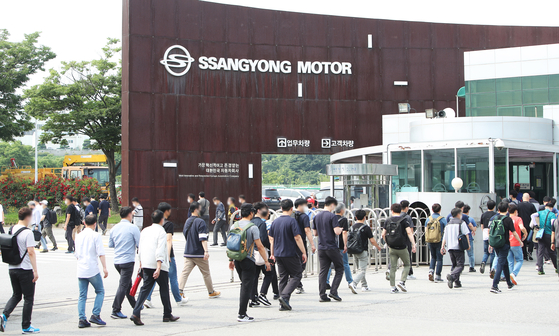
SsangYong Motor Co. employees have begun taking rotational unpaid leaves as part of self-help measures.
The two-year rotational unpaid leave, which is an extension of a wage cut and suspended welfare benefits until June 2023, was agreed upon between the company and its workers last month.
The arrangement is for 50 percent of assembly line workers in the Pyeongtaek plant, and 30 percent of office workers taking turns going on unpaid leave through June 2022.
The SUV-focused carmaker has a workforce of 4,590 as of Monday, consisting of 3,190 on the assembly line and 400 in the office.
The workers also agreed on Ssangyong's plan not to hire replacements to about 150 employees set to retire each year in the next five years.
SsangYong has been in the debt-rescheduling process since April after its Indian parent Mahindra & Mahindra Ltd. failed to attract investors.


CTOC Adds 3,000 Doctors, 500 Hospitals Ahead of Liquidity Push
Strait of Hormuz Disruption Sparks Global Oil Supply Fears
Cathay Pacific Holds Firm on Flight Capacity Amid Middle East Conflict and Rising Fuel Costs
Bank of Japan Eyes Further Rate Hikes Amid Middle East Tensions and Inflation Pressures
Europe's Aviation Sector on Track to Meet 2025 Green Fuel Mandate
Apple Turns 50: From Garage Startup to AI Crossroads
UAE's Largest Natural Gas Facility Suspended After Attack-Triggered Fire
Trump Administration Plans 100% Tariffs on Pharmaceutical Imports
Dollar Holds Steady as Yen Nears Critical 160 Level Amid Iran War Escalation
Eli Lilly and Insilico Medicine Forge $2.75 Billion AI-Driven Drug Discovery Deal
SoftwareONE Posts 22.5% Revenue Surge in 2025 on Crayon Acquisition
Britain Courts Anthropic Amid US Defense Department Dispute
U.S. Job Market Braces for Slow Recovery Amid Middle East Tensions and Economic Uncertainty
India's Central Bank Holds Rates Amid Iran War Energy Shock
Microsoft Eyes $7B Texas Energy Deal to Power AI Data Centers
Morgan Stanley: Fed Rate Cuts Still on Track Despite Oil-Driven Inflation
Japan's Services Sector Growth Slows in March Amid Rising Middle East Tensions 


