


 Panama Declares Emergency After 7.7 Earthquake Triggers 200 Aftershocks
  Pakistan Declares Emergency in Khyber Pakhtunkhwa, Suspends Imran Khan’s PTI Government
  Djibouti Migrant Boat Capsizes, Killing 139 and Leaving 84 Missing
  Zelenskiy Says Ukraine Received No Warning Before Russian Missile Attack
  NATO Commander Warns Russia of Devastating Response to Attack
  Trump Denies Russia and China Are Helping Iran in U.S. Conflict
  Mahmoud Abbas Postpones Palestinian Elections to September 2027
  MI5 Warns of Rising Iran, Russia Threats and AI Bioweapon Risks
  Zelenskiy Seeks New US Talks to Revive Ukraine-Russia Peace Negotiations
  Trump Denies China, Russia Are Helping Iran in War
  Elon Musk Donates $366 Million to 2026 US Midterms
  US Recalls Nicaragua Envoy After Ambassador Rejection
  India Voter List Protests Reach Supreme Court as Opposition Demands Election Chief's Resignation
  Most Americans Oppose Election Betting on Prediction Markets, Poll Finds
  North Korea Fires Ballistic Missiles as Tensions With South Korea Escalate
  US Authorities Raid Ilhan Omar’s Home Amid Immigration Fraud Probe
  Kim Jong Un Showcases ICBM Ahead of Possible Trump Meeting


 Add as a preferred source on Google
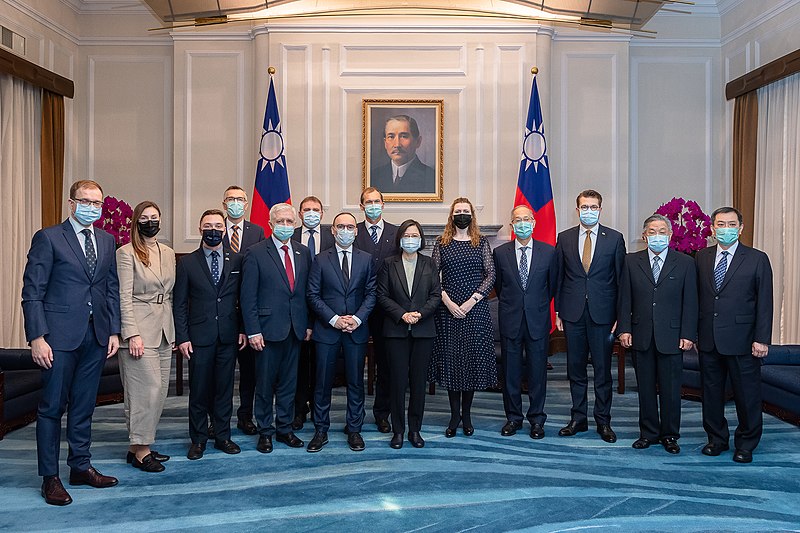
Taiwan has announced the start of operations of Lithuania’s office in Taipei this week. The opening of the Lithuanian office in the island’s capital comes amidst tensions with China.
Senior Taiwanese diplomat Remus Chen of the foreign ministry’s department of European Affairs told reporters Tuesday that Lithuania’s office in Taipei has opened and started its operations.
The new representative, Paulius Lukauskas, arrived earlier this month and formally applied for accreditation Monday. Chen added that the Lithuanian office was essentially now operational, but office equipment is still being installed.
This comes as China retaliated against Lithuania by downgrading diplomatic relations between the two countries while pressuring others to sever ties with Lithuania after it allowed the island nation to open a de facto embassy in the country. China has repeatedly opposed Lithuania’s engagement with the island nation, which Beijing claims as its territory.
Beijing said Taiwan is one of its provinces with no right to the features of a state. Taiwan’s democratic government has also strongly rejected China’s claims of control over the island.
Back in August, China sanctioned Lithuanian deputy transport and communications minister Agne Vaiciukeviciute for visiting Taiwan. Beijing has also opposed visits by other foreign governments to the island nation, which has since increased following the visit by US House Speaker Nancy Pelosi in the same month.
Taiwan has strong bipartisan support in the US Congress. The United States is legally bound by treaty to provide the island nation with arms.
Reuters reports that Washington is considering sanctioning China as it considers options for a sanctions package for Beijing to deter it from potentially invading Taiwan, according to sources familiar with the matter. The European Union is also facing pressure from Taiwan to do the same.
According to the sources, the discussions being lobbied by envoys of Washington and Taipei to the bloc were both at an early stage amidst fears of a potential military invasion of Taiwan by China.
Both discussions were about taking sanctions beyond the measures that the West has already made to restrict some trade and investment with China surrounding sensitive technologies such as chips and telecommunications equipment.







