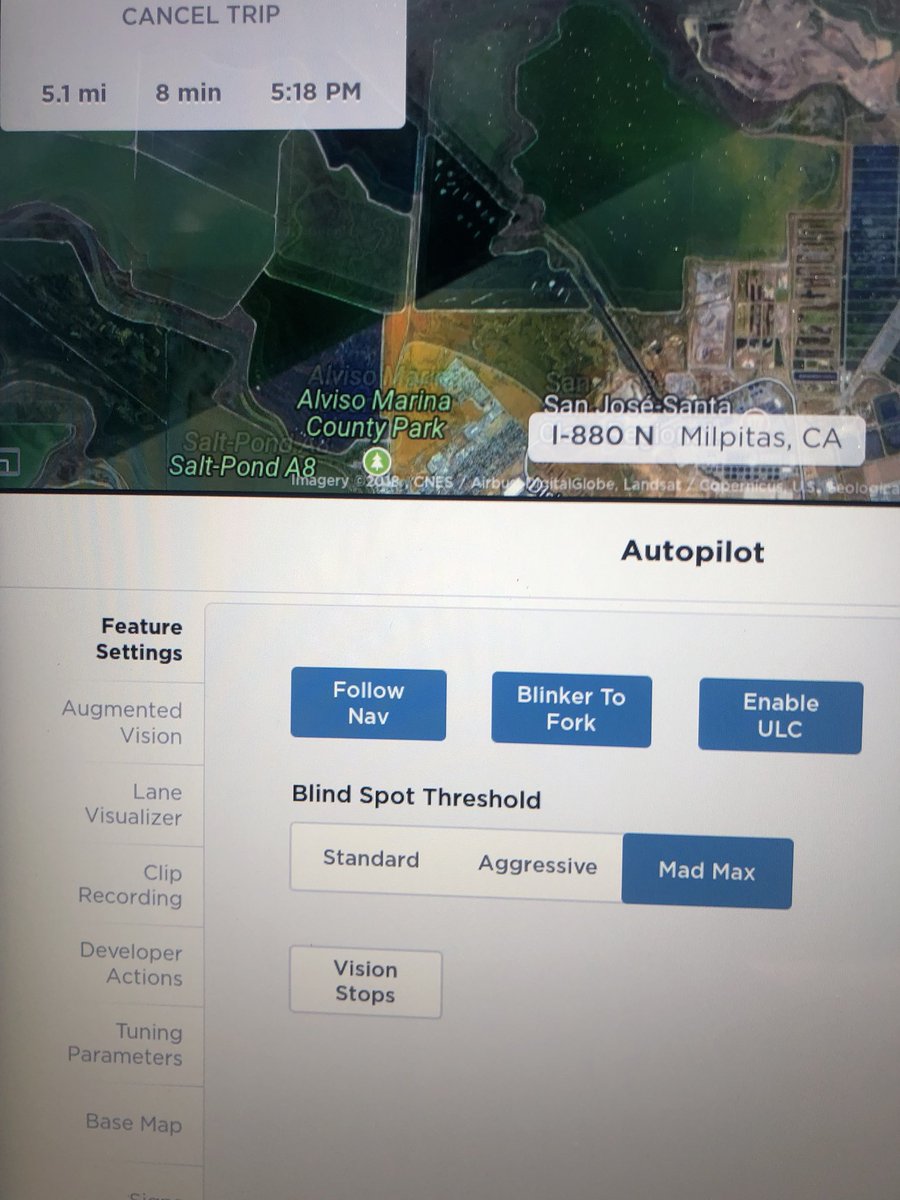
Tesla might just be the last company that can be associated with a film property like “Mad Max” simply due to the fact that it’s known as an all-electric entity. However, CEO Elon Musk recently revealed that the company was working on an autopilot mode called “Mad Max.” What’s more, he did so by associating the mode with the company’s all-electric Semi trucks.
As usual, Musk used Twitter to make this momentous announcement. No, it’s not a mode where the Semi simply rams all other vehicles in front or to the side of it off the road when in a hurry. The “Mad Max” mode is actually intended for occasions when traffic is particularly congested.
By ramping up the near-object detection capabilities of the trucks, this autopilot mode is the equivalent of a driver paying closer attention to the surrounding vehicles. This ensures that the sensors won’t miss any car in the vicinity, thus avoiding accidents.
In a tweet that includes an image of what appears to be a console screen, the “Mad Max” mode appears alongside its milder counterparts, “Standard” and “Aggressive.” As with many of his decisions regarding innovations by his company, this feature appears to have been influenced by Musk’s own hatred of traffic jams.
Autopilot can actually alleviate much of the frustration that drivers might feel when stuck in congested roads. Experts are convinced that self-driving vehicles can reduce traffic jams significantly. If drivers aren’t needed on the wheel, they can also just occupy themselves with other activities while sitting in traffic.
The Tesla Semi trucks also come with autopilot mode, CNN notes, and these vehicles need the “Mad Max” mode more than the company’s smaller cars do. On congested roads, it would be easy for the gigantic vehicle to accidentally bump into other cars. To avoid unnecessary accidents, setting the sensors to maximum only makes sense.