


 Vitalik Buterin Says Hegota Could Be Ethereum’s Last Conventional Fork
  DogeOS Launches Testnet to Bring DeFi Apps to Dogecoin
  Amazon Eyes $8 Billion Nvidia Chip Spinoff to Fund AI Expansion
  Robinhood Launches AI Agents for Automated Trading
  Trump, Tech Leaders Sign ‘Morally Binding’ AI Safety Accord
  DeepSeek, Huawei Partner on Ascend AI Chip Programming Tools
  OpenAI Scraps GPT-6.1 Astra Launch Over Safety Concerns
  WordPress Malware Uses Ethereum to Evade Removal
  Samsung Invests $1 Billion in KKR’s Helix AI Infrastructure
  TSMC Accelerates 2nm Expansion as AI Chip Demand Surges
  Apple iPhone 18 Pro Sales Jump 12% in China
  Apple CEO John Ternus Plans Major Overhaul
  SoftBank Shares Fall After $10 Billion OpenAI Investment
  Polymarket Traders Bet on Trump AI Rename to ‘Super Intelligence’
  OpenAI Seeks $30 Billion at $1.4 Trillion Valuation
  CSL Partners With AWS to Bring AI Into Drug Research


 Add as a preferred source on Google
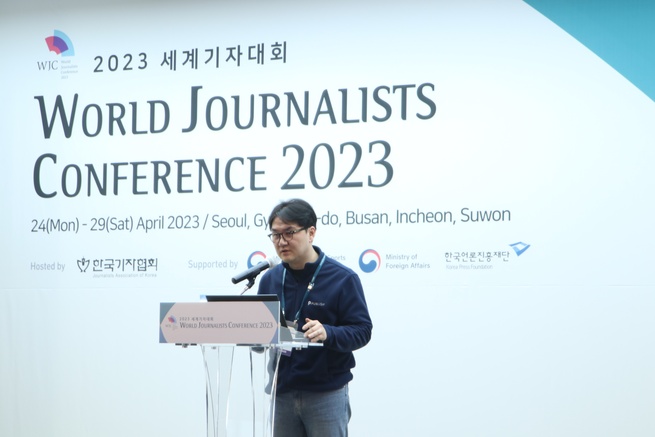
SEOUL, South Korea — In a keynote speech at the 11th annual World Journalists Conference in Seoul, Sonny Kwon, CEO of PUBLISH, shared his vision for the future of journalism, highlighting the potential of blockchain technology to transform the industry. Kwon proposed a new revenue model for media outlets that utilizes a token reward system and ecosystem to increase reader engagement, while also combatting fake news and promoting transparency.
Kwon emphasized the need to restructure the revenue structure of media outlets and highlighted the potential of blockchain technology to promote transparency and combat the spread of fake news. He introduced blockchain technology as a solution to the problems faced by news media and described the publishing protocol ecosystem as a potentially sustainable community and system.
The token reward system proposed by Kwon would reward readers for activities such as reading, sharing, and commenting, creating an environment where journalism could focus on journalistic pursuits rather than news production for traffic. This would reduce the distribution stage of advertisements to increase efficiency.
PUBLISH has collaborated with the Korea Journalist Association to build the world's first decentralized, contactless identity verification system for journalists. Kwon highlighted the limitations of plastic press cards issued by many journalist associations worldwide and proposed the DID press card issued by PUBLISH as a more stable and secure alternative.
Kwon also noted that media outlets can expect to improve their revenue through blockchain technology by creating non-fungible tokens (NFTs) as an additional source of income. News articles and photos can be converted into NFTs, proving ownership and originality and allowing for efficient transactions.
Finally, Kwon explained that the reward system for readers will not diminish the quality of journalism or the media industry but instead provide a way to approach readers more intimately and transform them from "simple consumers or spectators" into active "stakeholders" who can share value in various ways.
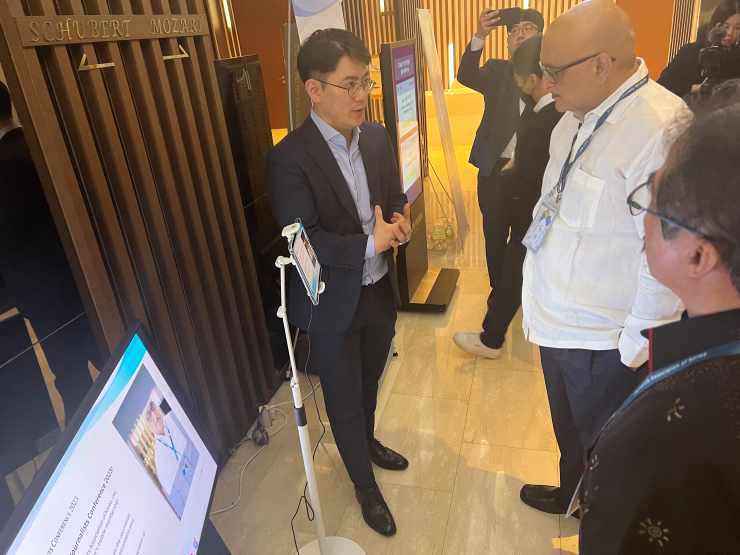 In the photo, a PUBLISH representative is demonstrating the Korea Journalist Association's decentralized identity verification (DID) press card to attendees.
The conference, which drew over 70 journalists from 50 countries, offered a platform for journalists from around the world to discuss pressing issues facing the journalism industry. The focus of this year's event was to explore the coexistence and development of local regions and journalism and to discuss the future of journalism in the digital age. Kwon's speech, entitled "Blockchain-Based News Ecosystem," showcased the potential of blockchain technology to transform the journalism industry, leaving attendees with much to consider.







