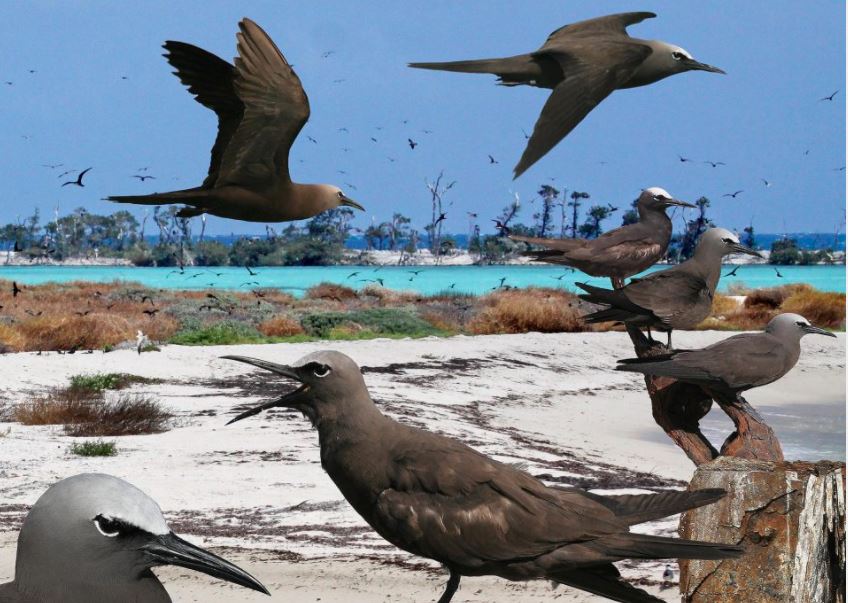
An international team of researchers estimates that about half of the world's seabirds have ingested plastic additives after studying 145 seafowls of 32 species from 16 areas of the world.
Plastic chemicals such as brominated flame retardants and ultraviolet absorbers were found in 76 of these, including three from the waters of Awashima island in Niigata Prefecture, which was polluted at mild concentrations.
Ultraviolet absorbers are used to prevent the sunlight-induced degradation of plastics.
Their findings appeared in the English-language journal of the Japan Society for Environmental Chemistry in October.
In addition to the seabirds, chemicals used in plastic products to prevent them from deteriorating or catching fire have been found in other wildlife, including hermit crabs and humans.
Experts are calling for closer studies to be conducted on countermeasures against pollution by plastic additives, which even very small quantities could have adverse health effects.
The researchers were mainly from Japan and the US.



Dollar Weakens Ahead of Expected Federal Reserve Rate Cut
Extreme heat, flooding, wildfires – Colorado’s formerly incarcerated people on the hazards they faced behind bars
As the Black Summer megafires neared, people rallied to save wildlife and domestic animals. But it came at a real cost
Lost in space: MethaneSat failed just as NZ was to take over mission control – here’s what we need to know now
NASA and Roscosmos Chiefs Meet in Florida to Discuss Moon and ISS Cooperation
How America courted increasingly destructive wildfires − and what that means for protecting homes today
Oil Prices Rise as Ukraine Targets Russian Energy Infrastructure
Astronomers have discovered another puzzling interstellar object − this third one is big, bright and fast
An unexpected anomaly was found in the Pacific Ocean – and it could be a global time marker
Swimming in the sweet spot: how marine animals save energy on long journeys
SpaceX’s Starship Completes 11th Test Flight, Paving Way for Moon and Mars Missions
Asian Currencies Edge Higher as Markets Look to Fed Rate Cut; Rupee Steadies Near Record Lows
Fertile land for growing vegetables is at risk — but a scientific discovery could turn the tide
We combed through old botanical surveys to track how plants on Australia’s islands are changing
Lake beds are rich environmental records — studying them reveals much about a place’s history 


