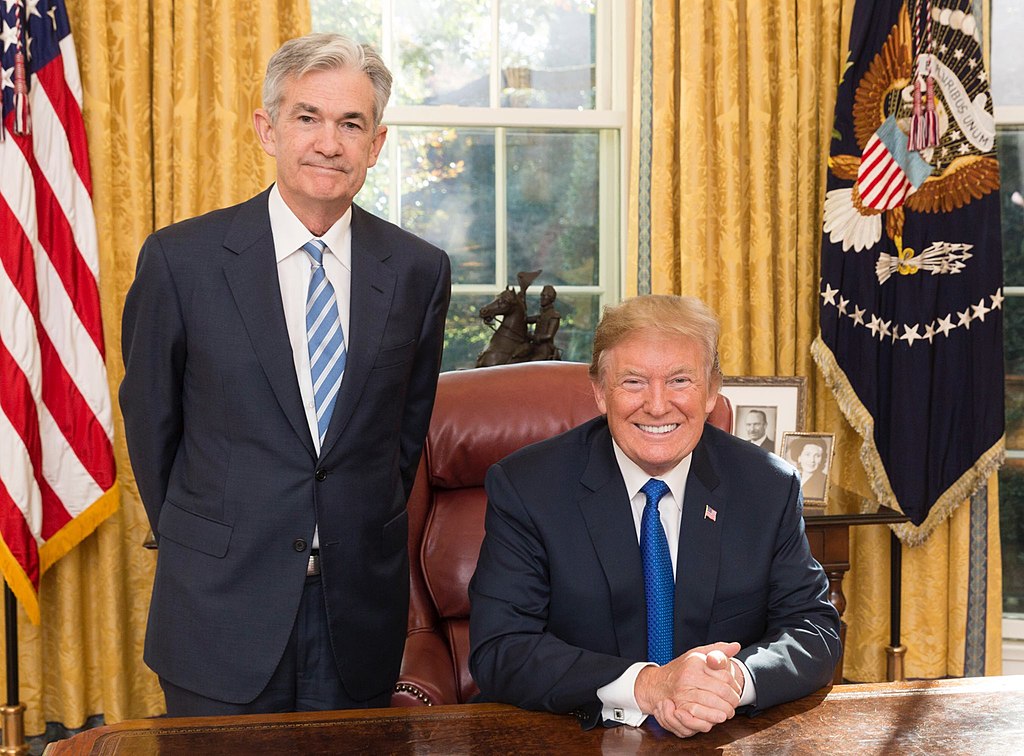
U.S. President Donald Trump is shifting blame for potential economic downturns caused by his trade tariffs onto the Federal Reserve and its Chair, Jerome Powell. According to Nick Timiraos of the Wall Street Journal—dubbed the “Fed whisperer” for accurately forecasting Fed moves since 2022—Trump is pressuring the central bank to slash interest rates, warning of an economic slowdown if it doesn’t act swiftly.
Trump recently ramped up his attacks on Powell, calling him a “major loser” and “Mr. Too Late” on social media. Despite appointing Powell himself, Trump has also floated the idea of removing him, though Powell is set to remain Fed Chair until May 2026. Trump insists inflation is not a threat and argues that rate cuts are necessary to counteract the economic drag from his tariffs, including a hefty 145% duty on Chinese goods.
While Trump’s pressure campaign echoes his first-term attempts to sway the Fed, the current economic backdrop is starkly different. Inflation is a more pressing concern now, and the Fed has signaled caution. Powell recently highlighted the potential for Trump’s tariffs to push inflation higher and increase economic uncertainty.
Timiraos warns that even if Powell retains his position, Trump’s public criticism risks undermining the Federal Reserve’s independence and credibility. This could have long-term implications for investor confidence and monetary policy effectiveness.
Trump’s latest tirade rattled markets, triggering a sharp dip in U.S. stock prices, weakening the dollar, and sending Treasury yields higher. The political friction underscores growing tension between the White House and the Fed over economic strategy ahead of the 2024 presidential election.
This ongoing clash raises concerns over central bank independence and the direction of U.S. monetary policy amid escalating trade tensions.