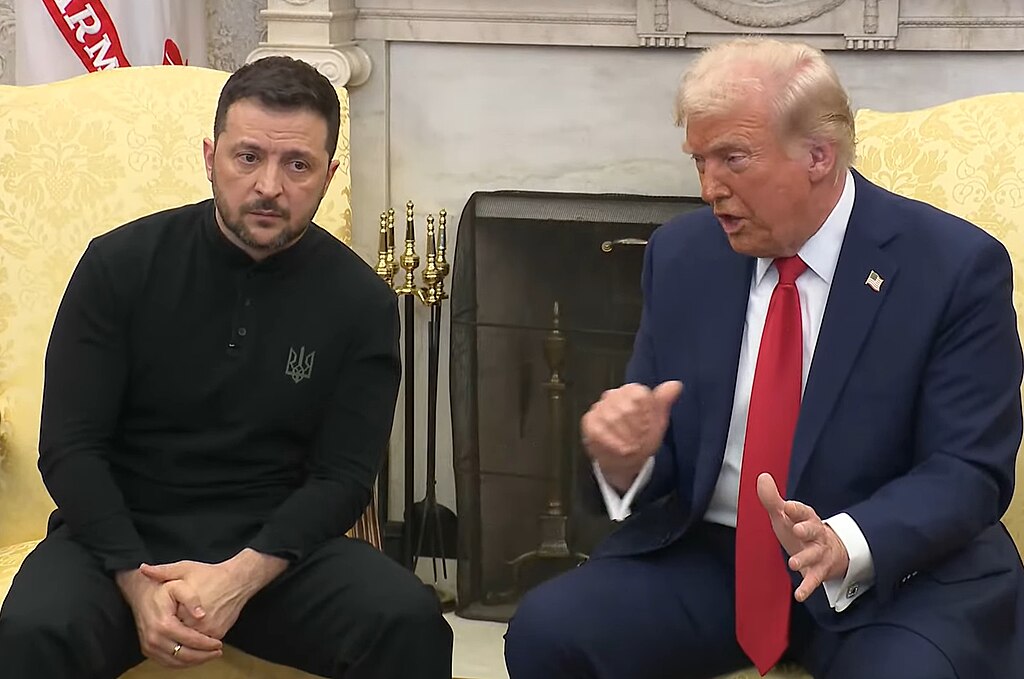
Ukrainian President Volodymyr Zelenskiy has reportedly been given only a few days to respond to a U.S.-backed peace proposal delivered by envoys representing President Donald Trump, according to a Financial Times report published Tuesday. The proposal, which has sparked significant international attention, would require Ukraine to concede certain territories currently under dispute in exchange for security guarantees from the United States. While the report highlights the urgency of the U.S. request, it also notes that key details—such as which regions Ukraine might be expected to cede—remain undisclosed.
The potential deal represents a major shift in the ongoing Russia-Ukraine conflict, raising questions about how territorial concessions could shape Ukraine’s sovereignty, regional stability, and long-term security. Analysts point out that any agreement involving territorial loss is likely to face strong resistance from Kyiv, given the Ukrainian government’s consistent stance on maintaining its internationally recognized borders. Additionally, the nature and strength of the U.S. security guarantees remain unclear, leaving open questions about how such assurances would deter future aggression or support Ukraine’s defense capabilities.
The reported proposal comes at a critical moment, as global leaders continue to search for viable paths toward ending the conflict. For Ukraine, the decision carries significant geopolitical implications, potentially influencing relations with Western allies, ongoing military support, and domestic political sentiment. For the United States, the move signals a renewed attempt to broker negotiations, though the lack of transparency surrounding the terms has fueled speculation about the broader strategic objectives.
As the deadline approaches, the international community is watching closely to see how Zelenskiy responds to what could become a pivotal turning point in the war. The coming days may determine whether this proposal opens a pathway to peace or deepens the complexity of an already protracted conflict.