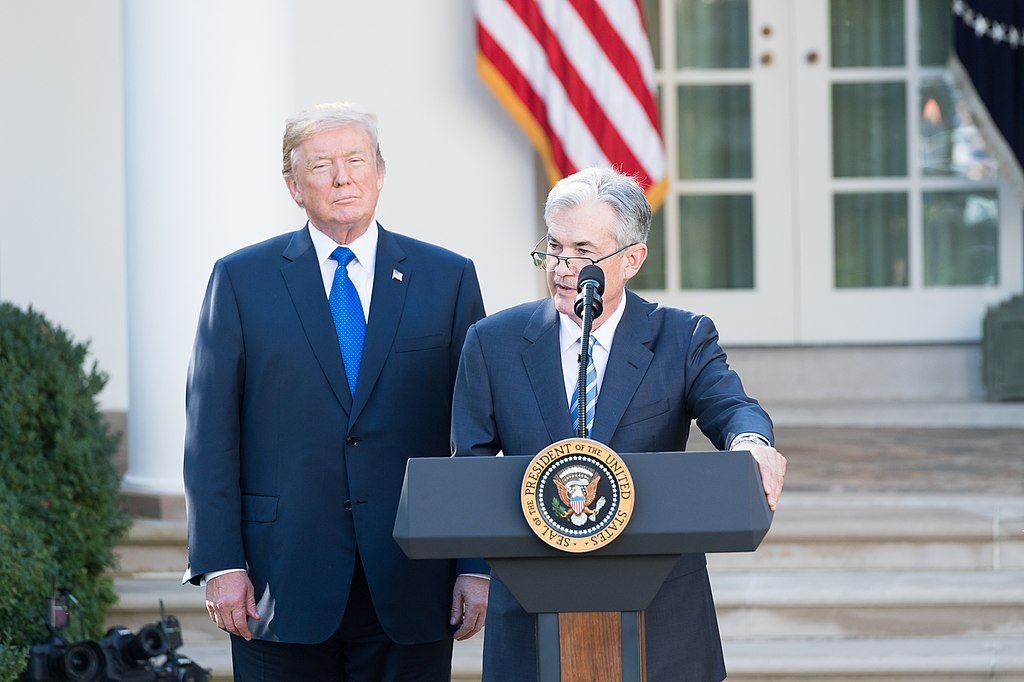
U.S. President Donald Trump is reportedly considering announcing Federal Reserve Chair Jerome Powell’s successor as early as this summer, according to the Wall Street Journal. The move comes amid Trump’s growing dissatisfaction with the Fed’s cautious approach to interest rate cuts.
Sources cited by the WSJ said Trump may bypass the typical three- to four-month transition period, aiming to name a replacement by September or October—or possibly sooner—to curb Powell’s influence on monetary policy and financial markets.
Trump has publicly criticized Powell, calling for aggressive rate cuts and blaming the Fed for stalling economic growth. Despite the pressure, Powell has maintained a cautious stance, recently reiterating to Congress that persistent inflation and tariff-driven uncertainty are key reasons for holding rates steady.
Among potential replacements are former Fed Governor Kevin Warsh, National Economic Council Director Kevin Hassett, Treasury Secretary Scott Bessent, former World Bank President David Malpass, and current Fed Governor Christopher Waller.
Powell, appointed by Trump in 2018, has made it clear he intends to complete his term, which expires in May 2026. His continued restraint on rate policy has become a flashpoint for Trump, who sees rate cuts as essential to boosting the economy ahead of the 2024 presidential election.
Trump’s accelerated timeline to name Powell’s successor could further rattle markets, especially if seen as politically motivated. Analysts warn that such a move might raise concerns over the independence of the Federal Reserve and could impact investor confidence in U.S. monetary policy.
This development adds another layer of uncertainty to an already volatile economic landscape as inflation, trade policy, and election-year politics collide.