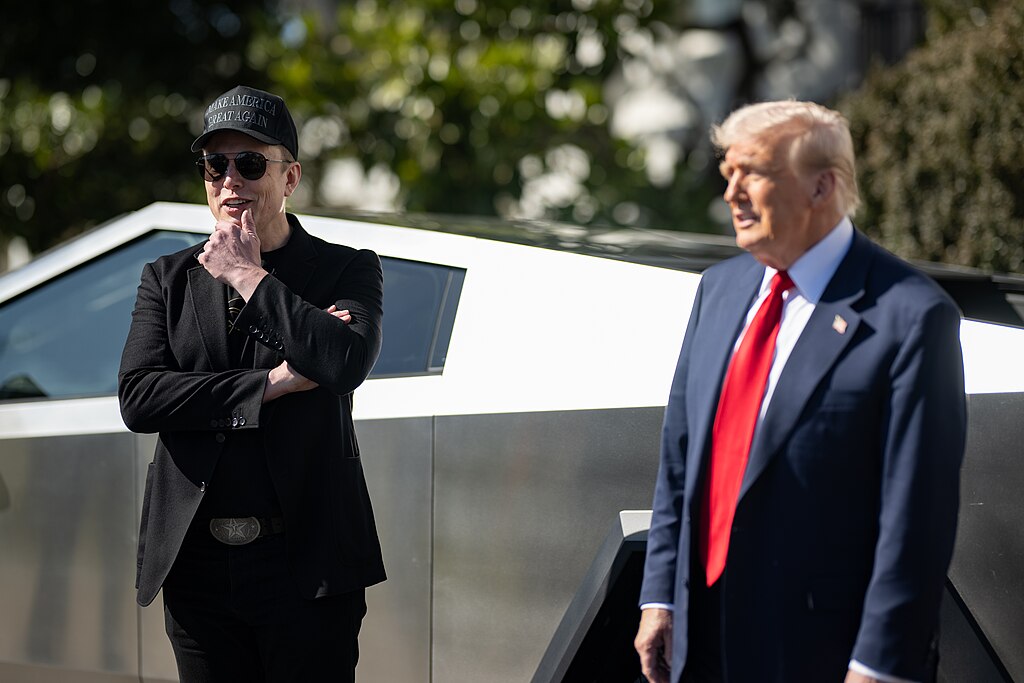
President Donald Trump stated Thursday he has no plans to revoke federal subsidies for Elon Musk’s companies, despite escalating tensions with the tech billionaire. Trump emphasized his desire for Musk’s businesses, including Tesla and SpaceX, to “thrive,” countering speculation that his administration might target them following a public dispute over tax policy.
The clash began after Musk criticized Trump’s sweeping tax and spending legislation, warning it could bankrupt the country. Musk, who launched a new political party in July, argued that claims about subsidies were misleading, noting SpaceX won NASA contracts competitively by delivering results at lower costs. He warned that redirecting contracts to other firms would increase taxpayer expenses and disrupt astronaut missions.
Tesla, however, has historically benefited from billions in tax credits for electric vehicle sales. Upcoming legislation signed by Trump will phase out a $7,500 new EV credit and $4,000 used EV credit on September 30, potentially impacting Tesla’s sales. Musk recently cautioned investors about “rough quarters” ahead due to reduced government incentives for EV makers.
The fallout marks a stark shift in their once-close relationship. Musk previously spent over $250 million to support Trump’s presidential campaign and led a federal cost-cutting initiative before exiting the administration in May. Following Musk’s criticism, Trump reportedly considered canceling federal contracts with SpaceX and directed reviews of its multibillion-dollar agreements with NASA and the Defense Department.
Despite the rift, SpaceX remains a key contender for Trump’s $175 billion Golden Dome missile defense project. However, officials are now exploring additional partners, signaling possible challenges to Musk’s dominance in upcoming federal defense initiatives.
This development highlights growing political and economic stakes for U.S. space and EV industries amid shifting federal policies.