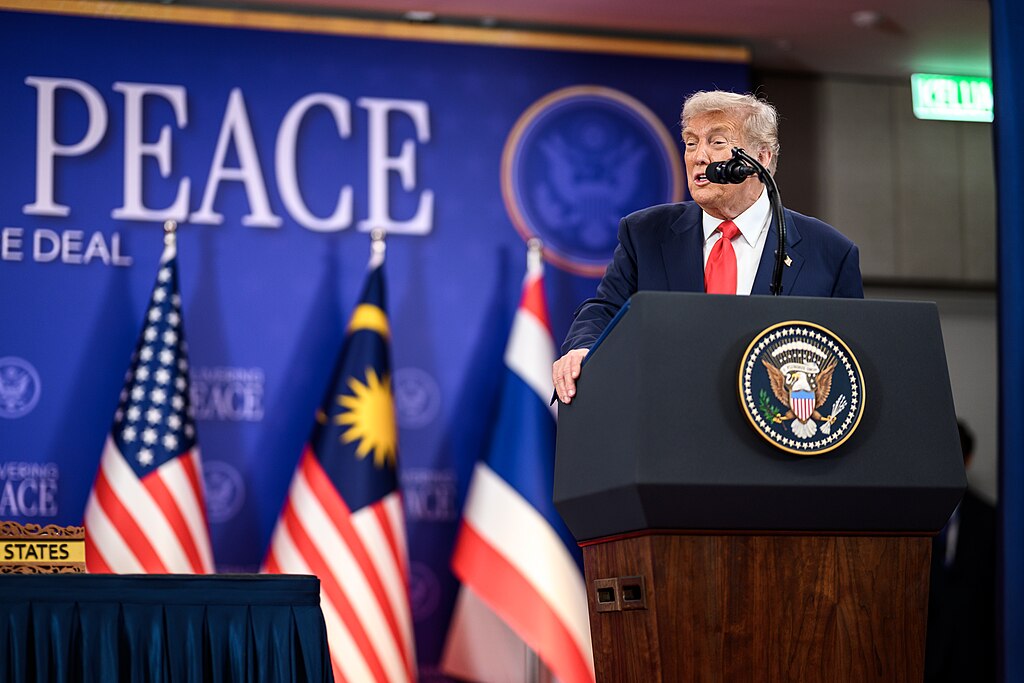
U.S. President Donald Trump said negotiations with Iran are scheduled to begin on Monday afternoon, signaling a possible breakthrough in efforts to reopen the Strait of Hormuz and reduce tensions in the Middle East.
Speaking to reporters aboard Air Force One on Sunday evening, Trump said discussions with Iran would begin shortly and expressed optimism that an agreement was close. He added that Saudi Arabia also believes a deal is imminent, particularly regarding the reopening of the Strait of Hormuz and progress toward Iran’s denuclearization.
Trump revealed that he recently canceled what he described as a “massive attack” on Iran after diplomatic discussions involving Saudi Arabia, the United Arab Emirates, Qatar, and Iran. Despite pausing military action, he emphasized that the United States remains prepared to respond if negotiations fail.
The comments came after Iranian Foreign Minister Abbas Araghchi said talks with Oman over the Strait of Hormuz were in their final stages. Iranian Foreign Ministry spokesperson Esmail Baghaei also confirmed that discussions with Oman focused on establishing a mutually agreed transit route through the strategically important waterway.
The diplomatic developments follow weeks of escalating conflict between the United States and Iran, including reciprocal military strikes that raised fears of a broader regional conflict. Washington had reportedly considered targeting Iranian energy infrastructure, prompting Tehran to warn of severe retaliation.
The renewed negotiations also aim to preserve a memorandum of understanding signed by both countries in June, which had been undermined by the recent exchange of attacks. Regional powers, including Saudi Arabia, Qatar, and Pakistan, have reportedly worked to revive diplomatic efforts and prevent further escalation.
However, uncertainty remains. Earlier on Sunday, Tehran stated that it had not yet approved any agreement to reopen the Strait of Hormuz and maintained that its official policy regarding the vital shipping route had not changed. Iran had effectively blocked the passage following U.S. military actions earlier this year.
Financial markets reacted quickly to signs of de-escalation. Oil prices dropped more than 4% in early Monday trading as investors welcomed Trump's announcement of renewed negotiations and the cancellation of planned military action, raising hopes that global energy supplies through the Strait of Hormuz could soon normalize.