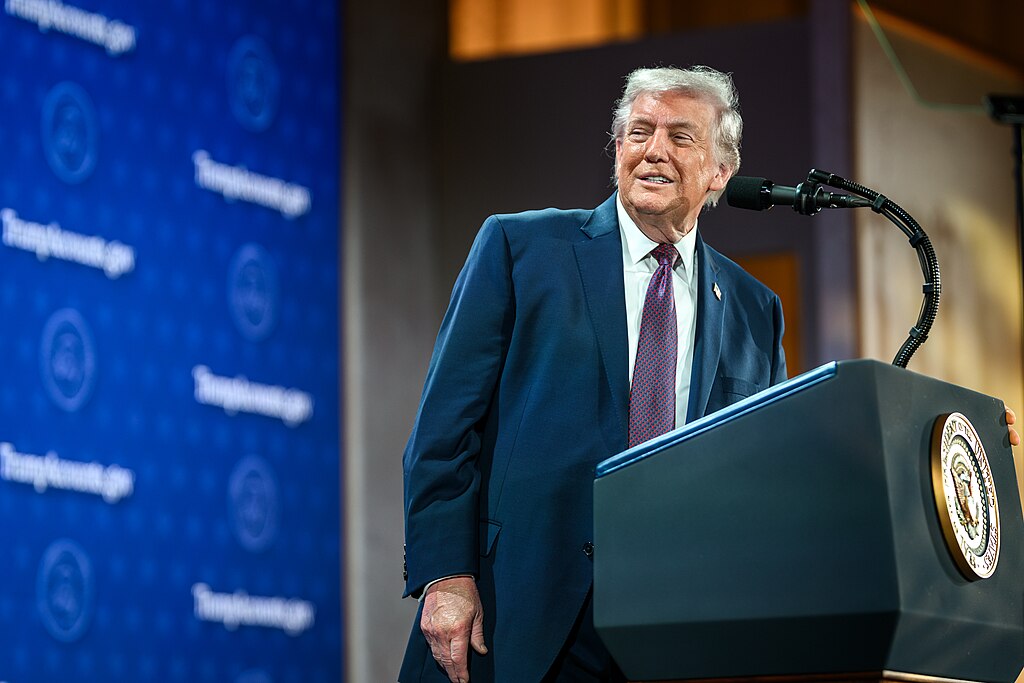
U.S. President Donald Trump stated on Saturday that the United States could potentially resume military strikes on Iran, highlighting ongoing tensions between the two nations. Speaking to reporters in West Palm Beach, Florida, Trump addressed questions about U.S. foreign policy and security concerns in the Middle East, suggesting that military action remains an option if circumstances escalate.
Trump’s remarks come amid continued global attention on U.S.-Iran relations, which have remained strained due to disagreements over nuclear activities, regional influence, and security threats. While he did not provide specific details or a timeline, his statement emphasized that the possibility of renewed strikes is being considered, depending on how the situation develops.
The comment was made in response to a reporter’s inquiry, underscoring the ongoing uncertainty surrounding diplomatic and military strategies involving Iran. Trump has previously taken a hardline stance on Iran, including authorizing targeted military actions during his presidency. His latest remarks appear consistent with that approach, reinforcing the idea that force could be used if deemed necessary to protect U.S. interests.
Analysts note that such statements can influence geopolitical dynamics, as both allies and adversaries closely monitor U.S. leadership signals. The potential for renewed military action raises concerns about regional stability, oil markets, and international diplomacy. At the same time, it also reflects the broader debate within U.S. politics regarding how to address Iran’s actions on the global stage.
As discussions continue, the international community is likely to watch closely for any concrete developments. Trump’s comments have once again placed the spotlight on U.S. policy toward Iran, a topic that remains critical to global security and economic stability.