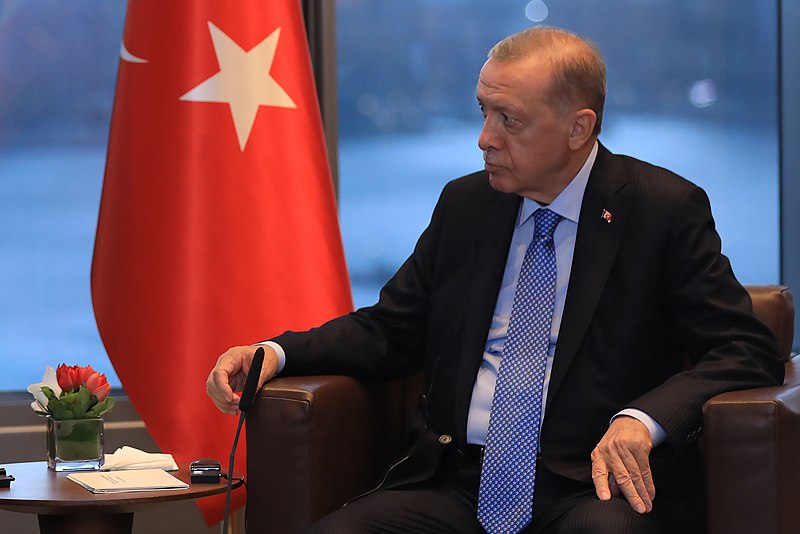
Turkish President Tayyip Erdogan said Ankara is positive about Finland’s bid to join the NATO alliance. However, the same may not be said for Sweden, with Erdogan citing the recent protests in Stockholm.
In remarks to the AK Party deputies in the Turkish parliament on Wednesday, Erdogan said Ankara’s stance on Finland’s bid to join NATO was positive, but not Sweden’s. Erdogan added that Sweden should not make any further efforts to win Turkey’s support, citing the recent protests that took place in Stockholm near the Turkish embassy. During the protests, a copy of the Koran was burned by a far-right Danish politician, sparking outrage from Turkey.
“Our position on Finland is positive, but it is not positive on Sweden,” said Erdogan. “Sweden should not bother to try at this point. We will not say ‘yes’ to their NATO application as long as they allow burning of the Koran.”
Sweden and Finland filed applications to join NATO last year as a result of Russia’s invasion of Ukraine. However, the two Nordic countries faced objections from Turkey, which accuses Sweden of harboring people it deems as terrorists. Ankara wants Finland and Sweden to take a stronger stance against the Kurdistan Workers’ Party which the Turkish government and the European Union considers to be terrorists.
Erdogan previously signaled over the weekend that Ankara would consider Finland’s application to join NATO. However, on Monday, Finnish foreign minister Pekka Haavisto said Finland would stick with its joint application with Sweden. Turkey and Hungary are the only NATO countries that have yet to ratify the two Nordic nations’ applications.
On the same day, NATO Secretary-General Jens Stoltenberg stressed the importance of the alliance working with partners in the Indo-Pacific region. Stoltenberg said Europe cannot ignore what happens in East Asia as global security is interconnected.
“Working with partners around the world, especially in the Indo-Pacific is part of the answer to a more dangerous and unpredictable world,” said Stoltenberg during an event hosted by Keio University in Japan, citing that the war in Ukraine highlights how global security is interconnected.
“It demonstrates that what happens in Europe has a consequence in East Asia and what happens in East Asia matters to Europe,” said the NATO chief.