


 UK Finance Minister Healey Calls for Fiscal Discipline Amid Global Risks
  Zelenskiy Offers Russia Energy Truce Amid Trump Pressure
  India Voter List Protests Reach Supreme Court as Opposition Demands Election Chief's Resignation
  US Condemns China Sanctions on Taiwan Allies Belize and Paraguay
  Trump Announces Russia-Ukraine Energy Ceasefire as Zelenskiy Awaits Details
  Djibouti Migrant Boat Capsizes, Killing 139 and Leaving 84 Missing
  Kim Jong Un Showcases ICBM Ahead of Possible Trump Meeting
  North Korea Fires Ballistic Missiles as Tensions With South Korea Escalate
  Trump Denies Russia and China Are Helping Iran in U.S. Conflict
  Mahmoud Abbas Postpones Palestinian Elections to September 2027
  Jordan Bardella Antisemitism Allegations Threaten Le Pen’s Campaign
  Houthis Warn Saudi Airports After Deadly Riyadh Attack
  Yandex Data Center Hit by Drone Strike as Russia-Ukraine Cyber Infrastructure Attacks Escalate
  Trump Calls for Zelenskyy Replacement Amid Russian Diesel Deal
  Most Americans Oppose Election Betting on Prediction Markets, Poll Finds
  Elon Musk Donates $366 Million to 2026 US Midterms
  Trump Plans White House Shake-Up of Key AI Safety Agency


 Add as a preferred source on Google
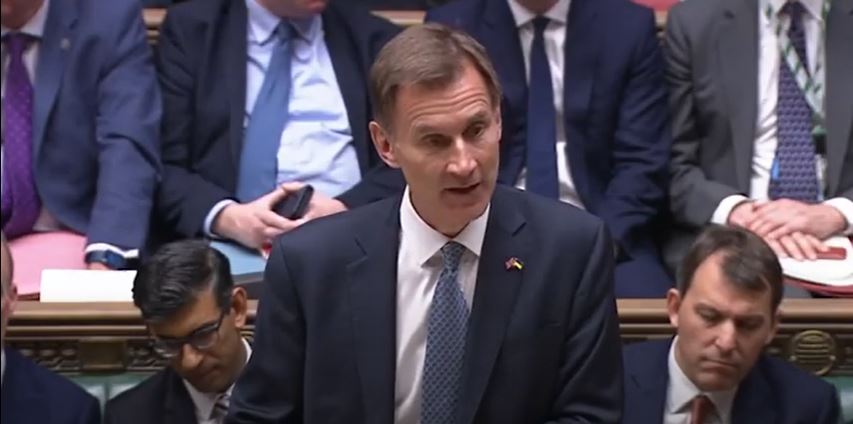
British finance minister Jeremy Hunt unveiled his budget program in the anticipated fiscal statement. Hunt warned that the country’s economy is already in recession as tax hikes and budget cuts are ahead.
Hunt unveiled the plan Thursday in his remarks at the House of Commons in order to patch up the country’s finances. Hunt said that the plan prioritized “stability, growth, and public services.” Hunt said that over half the country’s needed fiscal consolidation of £55 billion would come from spending cuts.
“On tax, I have tried to be fair by following two broad principles: Firstly, we ask those with more to contribute more; and secondly, we avoid the tax rises that most damage growth,” said Hunt.
Hunt lowered the threshold where the 45 percent personal income tax rate becomes payable from £150,000 to £125,140. Those who would earn £150,000 or more would have to pay a little more than £1,200 more per year. Hunt also said the government would increase a windfall tax on oil and gas companies and extend it to power generation firms.
The rate would go up to 35 percent from the current rate of 25 percent. This would also apply to electricity generators with a rate of 45 percent starting January 1, 2023.
Hunt said the country’s healthcare and social system would receive an £8 billion package in a span of two years, citing that healthcare chiefs said the amount would help address key priorities. Hunt also said he would increase the National Health Service’s budget in the coming two years by an additional £3.3 billion.
The social care sector would have a £2.8 billion increase in funding for 2023 and £4.7 billion the following year.
When it came to public spending, Hunt said that it would grow more slowly than the economy, and for the remaining two years of the government’s Spending Review, it would protect the increases in departmental budgets that were already set out in cash terms, a sharp cut due to high inflation rates.
“And we will then grow resource spending at 1 percent a year in real terms, in the three years that follow,” said Hunt. “Although departments will have to make efficiencies to deal with inflationary pressures in the next two years, this decision means overall spending in public services will continue to rise, in real terms, for the next five years.”







