
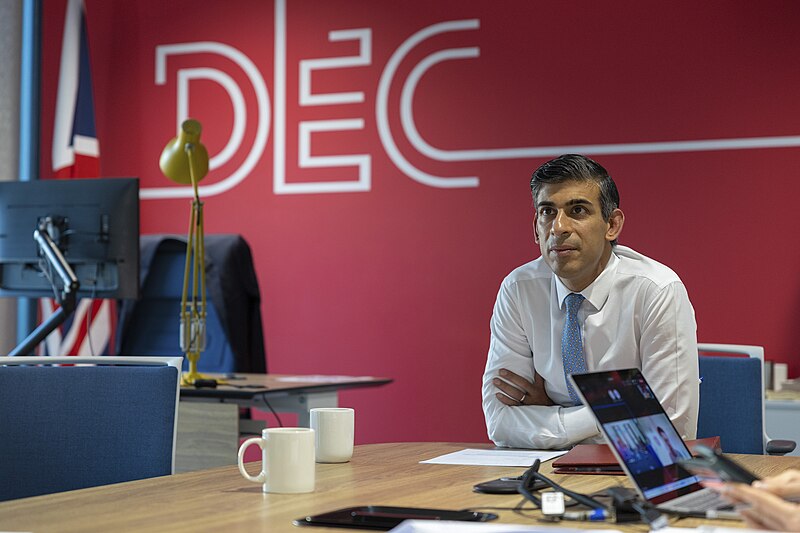
British Prime Minister Rishi Sunak said he has spoken with his ethics adviser over the handling of the speeding offense committed by interior minister Suella Braverman. This also follows calls for an investigation to determine whether Braverman breached any ministerial rules.
Sunak, who returned to the UK on Monday following a G7 Summit in Hiroshima, Japan, told parliament that he spoke with his ethics adviser and Braverman. Sunak said he wanted more information before deciding whether to call for an investigation into Braverman’s conduct.
“I’ve asked for further information and I’ll update on the appropriate course of action in due course,” said Sunak.
On the same day, Braverman expressed regret over the speeding offense she committed last year and paid the necessary fine, but that she did not evade punishment. The Sunday Times reported over the weekend that Braverman sought to get government officials to help arrange a private awareness course to keep her speeding violation from being publicized.
Opposition Labour leader Keir Starmer said Sunak must immediately launch an investigation and that Braverman should resign if the probe finds that she broke ministerial rules. Ministers are not allowed to use government officials to help with their personal affairs.
Since taking office last year, Sunak has sought to restore integrity in the government but has already lost three cabinet members due to scandals involving their conduct. Braverman resigned from her post last year after sending confidential information from her private phone. Less than a week later, Sunak reappointed Braverman as one of its first acts as prime minister.
On Sunday, Sunak said following the G7 Summit that China poses the greatest challenge in the world to security and prosperity but that fellow G7 countries should not de-couple from it. Sunak cited the “increasingly authoritarian” Chinese government at home and “assertive” overseas.
“This is all about the de-risking, not de-coupling,” Sunak told reporters. “With the G7, we are taking steps to prevent China from using economic coercion to interfere in the sovereign affairs of others.”
Sunak’s prime ministerial predecessor Liz Truss had a more hawkish stance when she visited Taiwan last week, where she said that the West must not “appease and accommodate” China.
Photo: Simon Walker (No. 10 Downing Street)/Wikimedia Commons(CC by 2.0)
.jpg)