


 NATO Commander Warns Russia of Devastating Response to Attack
  Panama Declares Emergency After 7.7 Earthquake Triggers 200 Aftershocks
  Kim Jong Un Showcases ICBM Ahead of Possible Trump Meeting
  US Judge Blocks Trump Administration’s Taxpayer-Funded Political Ads
  Trump Announces Russia-Ukraine Energy Ceasefire as Zelenskiy Awaits Details
  North Korea Fires Ballistic Missiles as Tensions With South Korea Escalate
  Trump Denies Russia and China Are Helping Iran in U.S. Conflict
  Djibouti Migrant Boat Capsizes, Killing 139 and Leaving 84 Missing
  European Auto Stocks Rise as EU-China Trade Deal Targets Hybrid Imports
  UK Finance Minister Healey Calls for Fiscal Discipline Amid Global Risks
  Trump Announces Russia-Ukraine Energy Ceasefire Amid U.S. Pressure on Kyiv
  Elon Musk Donates $366 Million to 2026 US Midterms
  Brazil Election: Lula and Bolsonaro Rally Ahead of October 25 Runoff
  Yandex Data Center Hit by Drone Strike as Russia-Ukraine Cyber Infrastructure Attacks Escalate
  Zelenskiy Offers Russia Energy Truce Amid Trump Pressure
  Most Americans Oppose Election Betting on Prediction Markets, Poll Finds
  Pakistan Declares Emergency in Khyber Pakhtunkhwa, Suspends Imran Khan’s PTI Government


 Add as a preferred source on Google
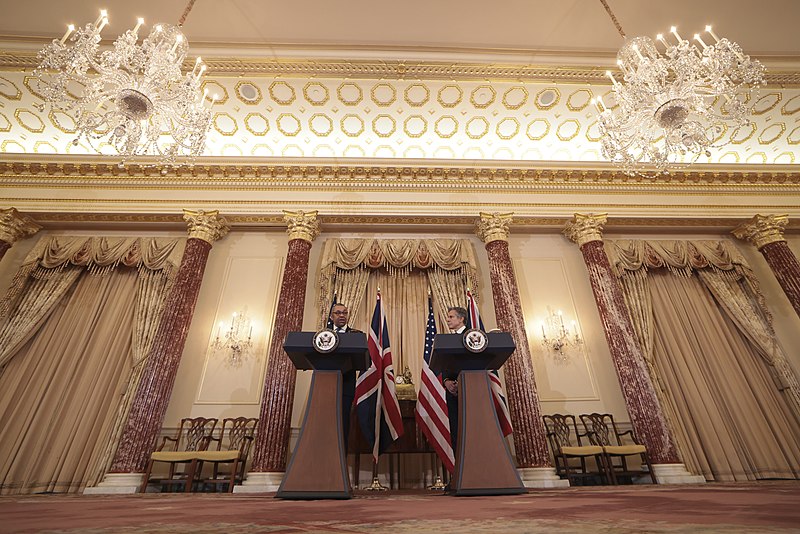
US Secretary of State Antony Blinken said Washington welcomed the progress that was made so far between the United Kingdom and the European Union in the ongoing talks on the Northern Ireland trade deal. Blinken’s comments come amidst optimism from both sides in reaching a solution to the issues surrounding the deal.
In a joint news conference with British Foreign Secretary James Cleverly after the meeting in Washington, Blinken said Washington welcomes the progress made so far on the ongoing talks. Blinken also reiterated the US stance that there must be a solution that is acceptable to all parties involved. Cleverly and Blinken’s meeting mostly focused on support for Ukraine, but the two top diplomats discussed other key issues, such as the ongoing talks on the trade deal.
“And we’re heartened that in recent days the United Kingdom and the European Union have made substantive progress toward a negotiated solution,” Blinken told reporters.
Cleverly said he updated Blinken on the talks that he described were done “in good faith with a genuine desire to get resolution to these important issues.”
While US President Joe Biden has often highlighted the importance of maintaining the 1998 Good Friday Agreement, US officials said Washington would not take sides on the matter of the post-Brexit trade deal between the UK and the bloc. The UK and the EU agreed on Monday to move forward with the talks even as there are still gaps that remain between both sides after a months-long deadlock.
The British Prime Minister’s office said on Tuesday that Prime Minister Rishi Sunak would not be extending the deadline to replace the remaining European Union laws that are in place even after the UK left the bloc. The debate on the legislation to replace EU laws is set to happen on Wednesday amidst criticism from those opposed that it could result in a weakening of protections that existed through the country’s EU membership.
The government said the legislation was not aimed at watering down such protections but instead would create a regulatory environment that will fuel economic growth. The most important provision in the bill automatically invalidates secondary retained EU law by December 31, which led to uncertainty among businesses and the concern that the scale of replacing EU laws would take up government resources.







