


 Saudi Arabia Raises Security Alerts as Houthi Attacks Threaten Oil Routes
  Trump Grants Clemency to Jay-Z Associate Emory Jones
  Philippines Holds Historic Bangsamoro Election Amid Tight Security
  US Resumes Immigrant Visa Processing for Hungary, Poland
  Australia’s Corporate Leaders Face Parliament Over KPMG Client Data Scandal
  Who should own the knowledge that underpins AI technology?
  OpenAI Rejects Apple Trade Secret Theft Claims
  Trump Administration Pauses Visa Appointments Worldwide
  What is Zionism? The different meanings of a contested term
  Brazil Warns EU of Retaliation Over Animal Products Ban
  Prince Harry, Elton John Ordered to Pay £9.54 Million in Daily Mail Legal Costs
  Honduras Court Drops Charges Against Ex-President Juan Orlando Hernandez
  Brazil Court Suspends Sigma Lithium Mine Operations
  Ukraine Races to Counter Russia’s Faster Jet-Powered Drones
  Sun Pharma Wins U.S. Appeal in Pfizer Lipitor Antitrust Case
  Yindjibarndi Appeals Fortescue Mining Compensation Ruling
  Sweden Election: Centre-Left Holds Narrow Lead


 Add as a preferred source on Google
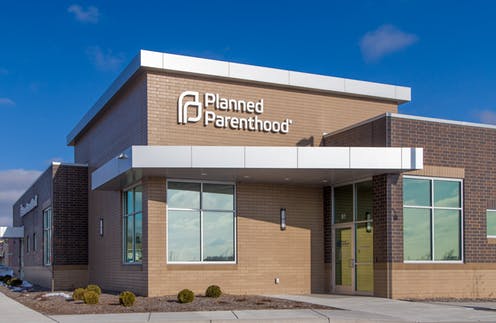
A U.S. appeals court has ruled in favor of the Trump administration, allowing it to enforce a controversial Medicaid funding restriction targeting Planned Parenthood in several Democratic-led states. On Tuesday, a three-judge panel of the Boston-based 1st U.S. Circuit Court of Appeals agreed to pause a lower court injunction that had blocked enforcement of the provision in 22 states and Washington, D.C., marking a significant development in the ongoing legal battle over abortion-related healthcare funding.
The decision permits implementation of a provision within the One Big Beautiful Bill Act, a major tax and domestic policy law passed by the Republican-controlled Congress and signed by President Donald Trump in July. The provision bars Medicaid funding for tax-exempt organizations that provide family planning or reproductive health services if they also perform abortions and received more than $800,000 in Medicaid reimbursements during the 2023 fiscal year. Planned Parenthood has argued the law was specifically designed to target the organization and says it has already led to the closure of at least 20 of its health centers nationwide.
The ruling temporarily overturns an injunction issued by U.S. District Judge Indira Talwani, who had previously blocked enforcement after concluding the states were likely to succeed in showing the law imposed unconstitutional retroactive conditions on Medicaid participation. Talwani reasoned that states lacked clear notice of which entities would be affected and could not have anticipated the funding restriction after their Medicaid plans were approved by the Centers for Medicare and Medicaid Services.
However, the appeals court panel—comprised entirely of judges appointed by Democratic presidents—found the Trump administration was likely to succeed on appeal. The judges said Congress had the authority to impose the funding changes and that the law was not ambiguous as claimed by the states and Planned Parenthood.
The ruling follows an earlier December decision by the same appeals court overturning Talwani’s prior finding that the law violated the U.S. Constitution. Representatives for Planned Parenthood and the coalition of Democratic attorneys general, including those from California, Massachusetts, and New York, did not immediately comment.
The case underscores the continuing national debate over Medicaid funding, abortion access, and federal authority, with broader implications for reproductive healthcare providers and low-income patients across the United States.







