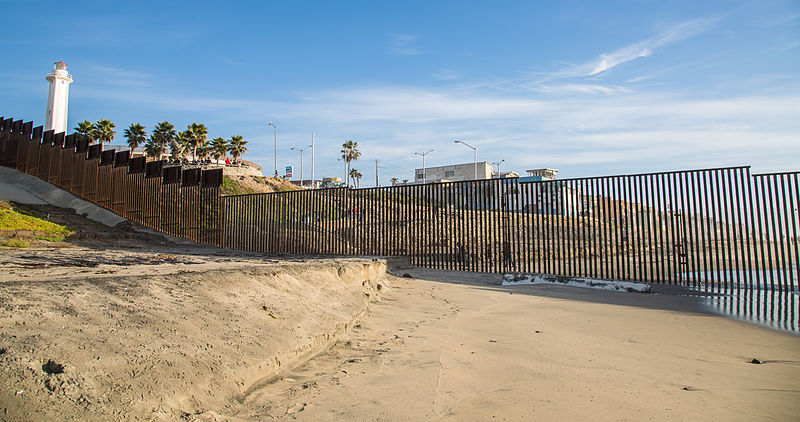
The Biden administration is sending an additional 1,500 troops to the United States-Mexico border. The additional deployment comes as the US gears for the lifting of COVID-19 border restrictions this month, anticipating a surge in illegal crossings.
The Pentagon issued a statement on Tuesday saying that it approved a request from the Department of Homeland Security to deploy additional military personnel to the southern border. The added deployment will only be in place for 90 days. A spokesperson for the Pentagon told reporters that additional troops would arrive at the border by May 10.
The DHS said in a previous statement that the additional deployment was due to the anticipated increase in attempted crossings at the border. The DHS said that while stationed there, the troops will be doing “non-law enforcement duties” such as data entry and warehouse support. The DHS said the added deployment will “free up DHS law enforcement to perform their critical law enforcement missions.”
White House Press Secretary Karine Jean-Pierre confirmed that the additional personnel will be doing “administrative tasks” and will not be interacting with immigrants or migrants. The 1,500 troops will add to the existing 2,500 National Guard members that have an ongoing deployment in the area.
Mexican President Andres Manuel Lopez Obrador told reporters that his country respects the US decision with the additional deployment.
This comes as the Biden administration has long sought to stem the influx of migrants attempting to cross the border and enter the US. President Joe Biden, who is running for re-election in 2024, has also come under increasing criticism and pressure from congressional Republicans over the border, including some Democrats.
On the same day, both US and Mexican governments said that the US will continue to accept migrants from Cuba, Haiti, Nicaragua, and Venezuela under a humanitarian program after Washington lifts the border restrictions on May 11. Mexico will continue to accept migrants that are turned away at the border on humanitarian grounds, the two countries said in a statement.
The US, on the other hand, has said it plans to ramp up deportations when the restrictions are lifted.