


 US Judge Blocks Trump Administration’s Taxpayer-Funded Political Ads
  Trump Buys Up to $25M in Meta Stock, Invests in SpaceX Debt
  Yandex Data Center Hit by Drone Strike as Russia-Ukraine Cyber Infrastructure Attacks Escalate
  Pakistan Declares Emergency in Khyber Pakhtunkhwa, Suspends Imran Khan’s PTI Government
  Trump Sanctions International Criminal Court, Sparking EU Backlash
  Trump Secures Russian Diesel Deal as US Fuel Prices Surge
  Trump Cancels Alabama Football Trip as Hurricane Isaias Approaches
  Venezuela’s Machado Calls for Elections by July 2027
  Djibouti Migrant Boat Capsizes, Killing 139 and Leaving 84 Missing
  Ripple Chairman Chris Larsen Donates $22.5 Million Ahead of US Midterms
  North Korea Fires Ballistic Missiles as Tensions With South Korea Escalate
  Panama Declares Emergency After 7.7 Earthquake Triggers 200 Aftershocks
  Trump Announces Russia-Ukraine Energy Ceasefire as Zelenskiy Awaits Details
  Houthis Warn Saudi Airports After Deadly Riyadh Attack
  Brazil Election: Lula and Bolsonaro Rally Ahead of October 25 Runoff
  Flavio Bolsonaro Leads Lula 49%-45% in Brazil Runoff Poll


 Add as a preferred source on Google
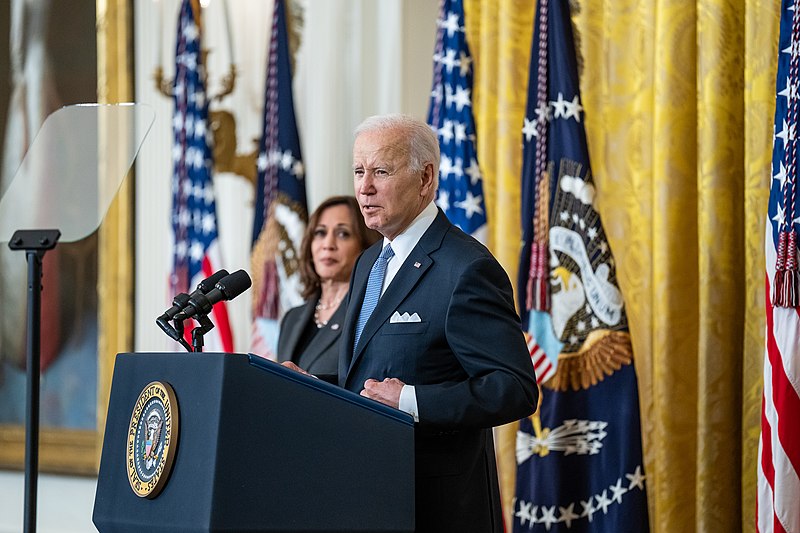
This week, the Biden administration announced that it would be providing $400 million for expanding internet access to rural areas in the country. This provision is part of President Joe Biden’s effort to expand internet access all over the country.
Speaking with reporters Thursday, infrastructure coordinator Mitch Landrieu said the $401 million provided would help people in rural areas get access to high-speed internet. The $401 million in loans and grants is coming from the ReConnect Program dispersed by the Agriculture Department.
“With this money, we are one step closer to President Biden’s ambitious goal of affordable and reliable internet for all,” said Landrieu.
The money will be used to support internet access expansion in 11 states: Alaska, Arizona, Arkansas, California, Colorado, Idaho, Montana, New Mexico, Nevada, North Dakota, and Texas, according to the USDA.
Vice President Kamala Harris will also be travelling to New York to unveil the formation of the Economic Opportunity Coalition, made up of 23 companies and foundations. The coalition aims to invest billions into low-income communities.
The White House said the coalition will “address economic disparities and accelerate economic opportunity in communities of color and other underserved communities.”
Among the founding members of the coalition are Ariel Investments, Bank of America, BNY Mellon, Capital One, Citi, Discover, Ford Foundation, Goldman Sachs, Google, Key Bank, Kresge Foundation, Mastercard, McDonald’s, McKinsey & Company, Micron, Momentous Capital, Moody’s, Netflix, Paypal, PNC, The Rockefeller Foundation, TIAA, and Upstart.
Meanwhile, Senate Democrats are set to reach a budget reconciliation deal on legislation that has provisions for the climate. The legislation, brokered by Senators Chuck Schumer and Joe Manchin, was praised by clean energy advocates even as the legislation was a watered-down version of the previous legislation.
In a summary released by Schumer’s office, the bill would cut carbon emissions by 40 percent by 2030, as well as a “methane emissions reduction program” to cut leaks of potential greenhouse gas methane from the drilling of natural gas.
Manchin said the legislation would invest in hydrogen, nuclear power, renewables, fossil fuels, and energy storage. More than $60 billion would be invested into environmental justice programs to fight pollution and address public health issues in disadvantaged communities.
$20 billion would be invested into “climate-smart” agriculture practices and $10 billion for tax credits in building clean energy manufacturing plants for EVs, wind turbines, and solar panels.







