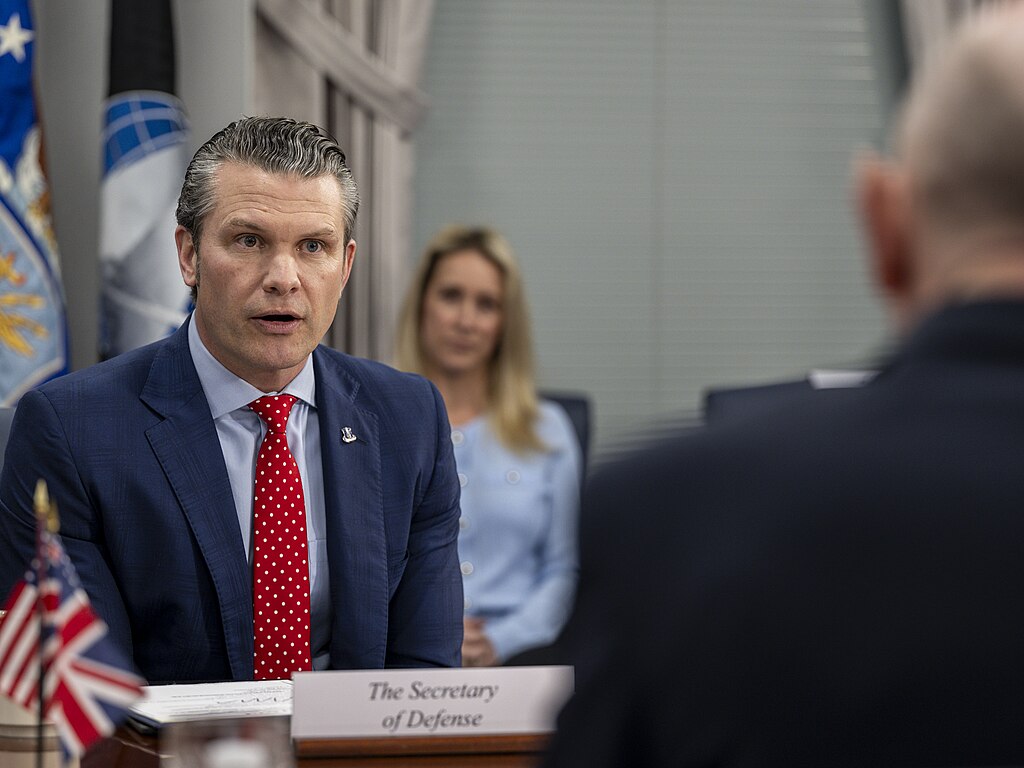
U.S. Defense Secretary Pete Hegseth arrived in South Korea on Monday for strategic talks aimed at redefining the role of U.S. troops on the Korean Peninsula amid shifting regional security dynamics. During his visit, Hegseth is also expected to tour the heavily fortified Demilitarized Zone (DMZ) bordering North Korea.
The visit precedes the annual Security Consultative Meeting (SCM) on Tuesday, where Hegseth and South Korean Defense Minister Ahn Gyu-back will discuss strengthening the U.S.-South Korea military alliance. The SCM serves as the highest-level defense dialogue between the two nations, focusing on joint readiness against North Korea’s growing nuclear and missile threats, as well as enhanced cooperation on regional defense, cybersecurity, and missile systems.
Washington is reportedly considering adjusting the mission of the 28,500 U.S. troops stationed in South Korea to allow more flexibility in responding to wider regional threats. This shift could enable U.S. forces to operate beyond the peninsula in response to potential conflicts in the Taiwan Strait or increased Chinese military assertiveness in the South China Sea.
While South Korea remains cautious about changing the current framework of U.S. forces, it has steadily strengthened its own defense capabilities over the past two decades. Seoul aims to eventually take wartime operational control of the combined forces, which include its 450,000 active troops.
In response to evolving regional challenges, South Korea is planning its largest defense budget increase in years for 2026, partly to address U.S. President Donald Trump’s push for allies to contribute more to hosting American troops. Meanwhile, North Korea continues to reject diplomatic engagement and expand its military capabilities, escalating tensions across the Korean Peninsula.