The United States government is likely going to delay a decision on whether to provide credits to manufacturers of electric vehicles under a renewable fuel scheme. The delay is likely due to legal challenges surrounding the scheme.
Reuters reported that Washington may delay the decision on providing EV manufacturers with tradable credits under the renewable fuel scheme due to concerns about potential legal challenges. The plan would give EV manufacturers credits for charging vehicles with power generated from renewable natural gas or methane from sources like cattle or landfills.
This follows the Environmental Protection Agency’s recommendation last year that EVs should be added to the US Renewable Fuel Standard, which would require oil refiners to blend biofuels into the fuel they produce or buy credits from oil refiners that do so. The EPA originally made the proposal to the program upon outlining the mandates for blending biofuels for 2023-2025.
The government would now be splitting the two schemes to avoid possible legal challenges that the inclusion of EVs may delay the issue of the next round of RFS quotas on biofuels. The quotas are expected to be finalized in June.
The EPA said it was considering public comments on the proposed change from 2022 but declined to reveal further details on whether it would split out the EVs from the June mandate. EPA spokesperson Timothy Carroll said the agency’s staff are in the process of finalizing the rule by the June 14 deadline.
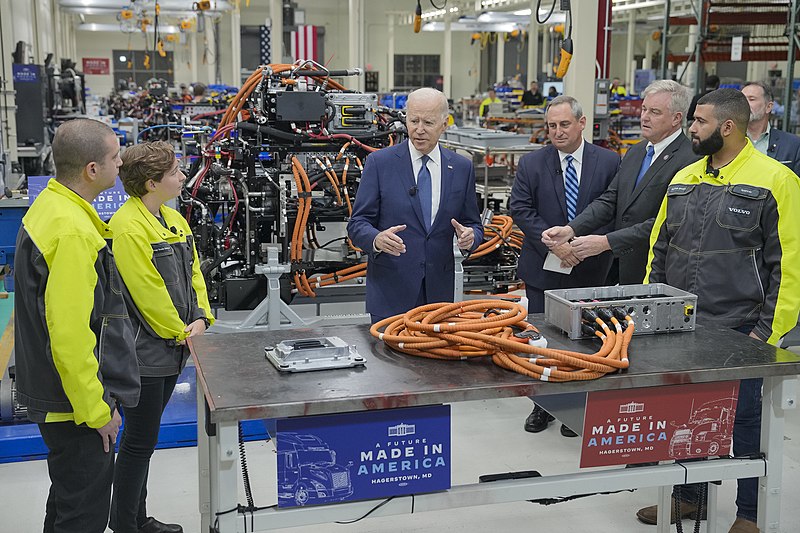
President Joe Biden has sought to transition the country’s car fleet to electric vehicles as part of his climate change policy. The credits would have added billions of dollars in incentives under the Inflation Reduction Act.
Meanwhile, Treasury Secretary Janet Yellen told Republican House Speaker Kevin McCarthy that if the debt ceiling is not raised, the federal government may hit its spending limit as early as June 1. In a letter to McCarthy published on Monday, Yellen said that based on the available information, the government would hit its spending limit by June 1 should Congress fail to raise the debt limit.
While Yellen’s letter indicates that the US could enter into default as early as that time, Yellen also noted that it is “impossible to predict with certainty the exact date when Treasury will be unable to pay the government’s bills.”