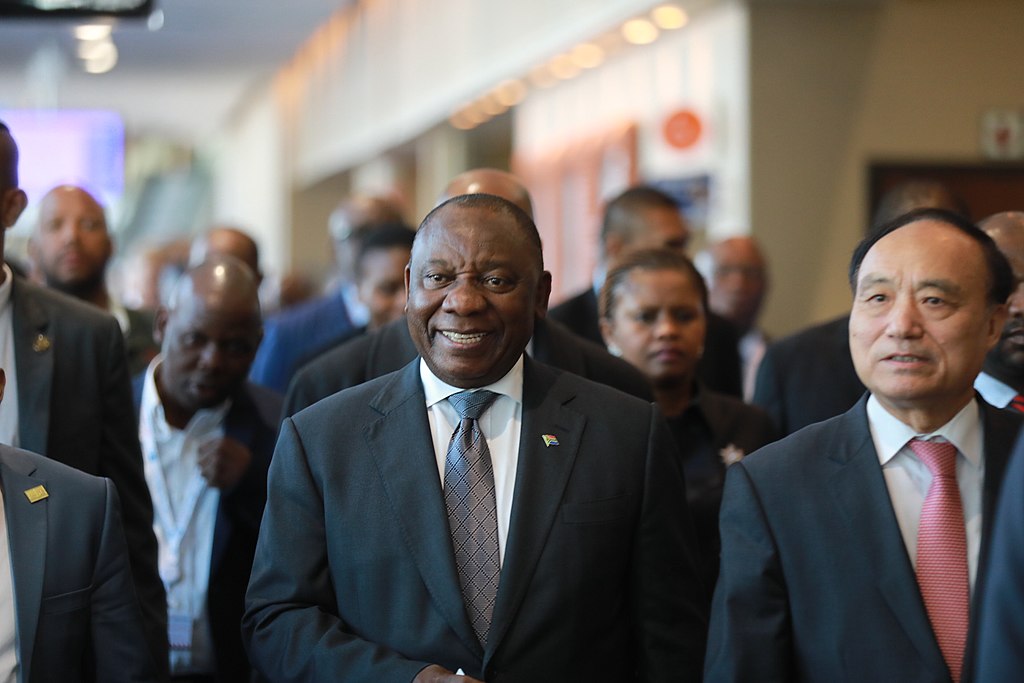
South Africa’s President Cyril Ramaphosa said the United States may be reconsidering its decision to skip the upcoming G20 summit in Johannesburg, despite earlier indications from the Trump administration that it would boycott the event. Speaking at a press briefing alongside European Commission President Ursula von der Leyen and European Council President António Costa, Ramaphosa revealed that Pretoria had received notice suggesting Washington might participate “in one shape or form,” though discussions were still ongoing. He emphasized the need to clarify what such participation could realistically entail given the short time before the November 22–23 summit.
The Trump administration previously announced that the United States would not attend the first G20 summit hosted in Africa, claiming South Africa discriminates against white citizens—an allegation South African officials have rejected. The boycott also appeared tied to Washington’s disapproval of the summit’s agenda, which focuses on global solidarity, climate resilience, clean energy transitions, and easing debt burdens for developing economies.
A White House official dismissed Ramaphosa’s remarks as “fake news,” stressing that the U.S. would not take part in G20 discussions. According to the official, only the chargé d’affaires in Pretoria would attend a formal ceremony marking the handover of the G20 presidency from South Africa to the United States. However, South African presidential spokesperson Vincent Magwenya insisted that “the president will not hand over to a chargé d’affaires,” reinforcing Pretoria’s expectation of higher-level American representation.
Ramaphosa previously remarked that he did not want to “hand over to an empty chair,” acknowledging ongoing uncertainty about the U.S. role as the summit approaches. The situation highlights the diplomatic tensions and political disagreements shaping this year’s global economic forum, drawing international attention to whether Washington will maintain its boycott or ultimately choose to engage.