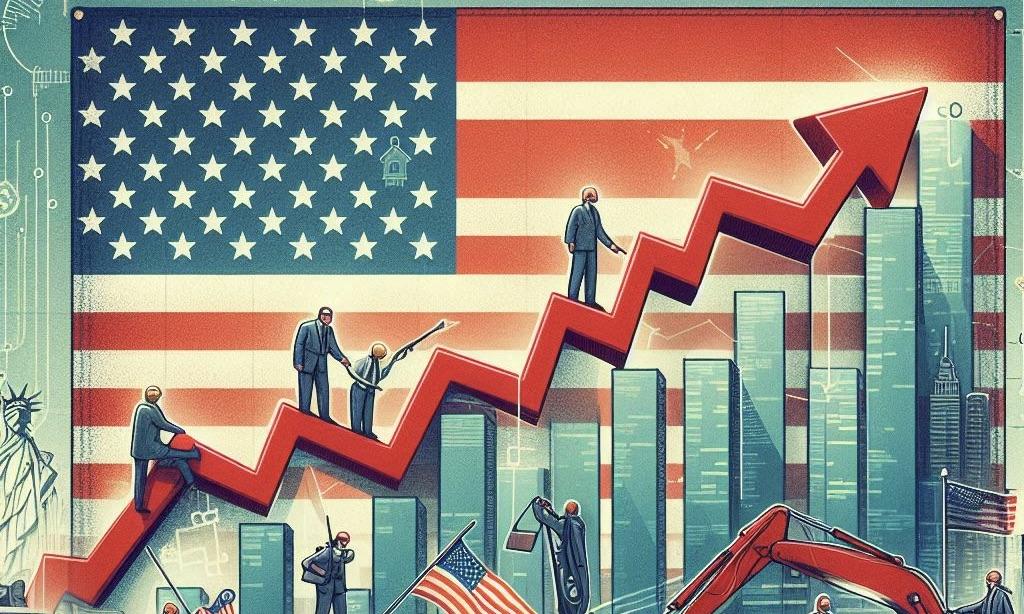
The US Services Index climbed to 51.4% in July, marking the sector's 47th expansion in 50 months. This improvement, alongside rising order backlogs and business activity, has helped ease recession fears and positively impacted market sentiment.
US Services Index Rises to 51.4%, Easing Recession Concerns Amid Market Volatility
As CoinGape shared information, the US recession discussion has been buoyed by a recent increase in a few market metrics, particularly after a previous stock market decline. In July, the Institute for Supply Management (ISM)'s US Services Index increased to 51.4%, the sector's 47th expansion in 50 months.
The ISM value exceeded the anticipated value of 51.0, and there were positive developments in inventory and services employment. The services activity in the United States experienced a moderate rebound last month, as indicated by the July results. It is bolstered by a rise in order backlogs from 44 to 50.6, an increase in business activity from 49.6 to 54.5, and a recovery in new orders from 47.3 to 52.5.
Additionally, the S&P Global Services Purchasing Managers' Index (PMI) fell short of last week's July forecast. For the second occasion this year, service provider employment increased from 46.1 to 51.1. This obscures the weak employment data released on Friday, ultimately leading to apprehensions regarding the potential for a recession in the United States.
Regrettably, the stock market crashed earlier in the day due to this dread of recession. Several investors have been compelled to engage in a selling spree due to the prospective outlook of the economy. Chris Shipley, the co-chief investment officer of Fort Washington Investment Advisors, expressed his opinion on the market outlook.
Shipley believes the current downturn should not induce investor panic, as the market was "certainly vulnerable" due to economic growth expectations and reduced inflation.
Japan's Nikkei Plunge Triggers Market Anxiety and Over $1 Billion in Crypto Liquidations
In the early trading hours on August 5, Japan's Nikkei experienced an additional 13% decline. It precipitated an increase in market anxiety, which soon led to a decline in the cryptocurrency market. Crypto liquidation has reached one of its highest levels in an extended period.
Notably, the crypto market experienced a loss of over $1 billion within the past 24 hours. To clarify, $900 million of the liquidation is allocated to long liquidations, while $106 million is allocated to short liquidations.
The market valuation of most cryptocurrencies, such as Bitcoin and Ethereum, experienced a substantial decline. Analysts have determined that Bitcoin is experiencing its most severe decline since the collapse of FTX, headquartered in the Bahamas, in 2022.