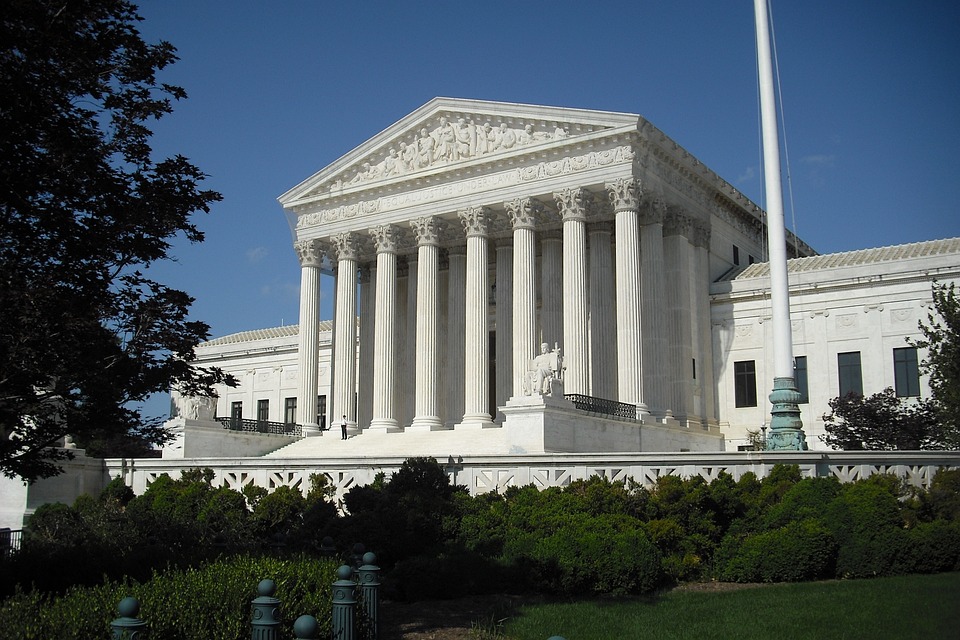
The Conservative majority of the United States Supreme Court is set to hear arguments in an appeal that could limit the judiciary of a state to scrutinize elections. The high court could potentially grant politicians more power over the conduct of elections while limiting the state courts’ ability to scrutinize such actions.
The Supreme Court is set to hear arguments in a case on Wednesday that could give politicians more power over the conduct of elections, limiting the ability of the state courts to scrutinize such conduct.
The court is set to hear an appeal of a decision made by the North Carolina Supreme Court back in February to scrap out the redistricted map of the state’s 14 districts that were approved by its GOP-controlled state legislature. The North Carolina court ruled that the map was biased against voters who lean Democratic.
The GOP lawmakers of the state that filed an appeal to the country’s highest court have argued a legal theory, which has been gaining traction among conservatives called the “Independent State Legislature” doctrine. The ISL doctrine, according to the lawmakers, argues that the US constitution gives state legislatures and no other entities, such as state courts, power over election rules and electoral district maps.
Top voting rights groups, as well as the state’s Justice Department, sued to block the enforcement of the GOP-favored map. They are also backed by the Biden administration.
Critics also argued that any endorsement made by the Supreme Court of the ISL doctrine would undermine the country’s democratic norms by restricting an important check on partisan political power while also resulting in voter confusion with rules that vary between local and federal elections.
On Monday, the conservative majority of the high court appeared prepared to rule in favor of a Christian web designer having the right to refuse to provide services to same-sex marriages in a case that the liberal justices argue could empower certain businesses to discriminate on the basis of constitutional free speech protections.
The Supreme Court heard arguments in the appeal made by Colorado-based web designer Lorie Smith, who is seeking an exemption from a state law that prohibits businesses from discrimination based on sexual orientation and other factors. The lower courts ruled against Smith.