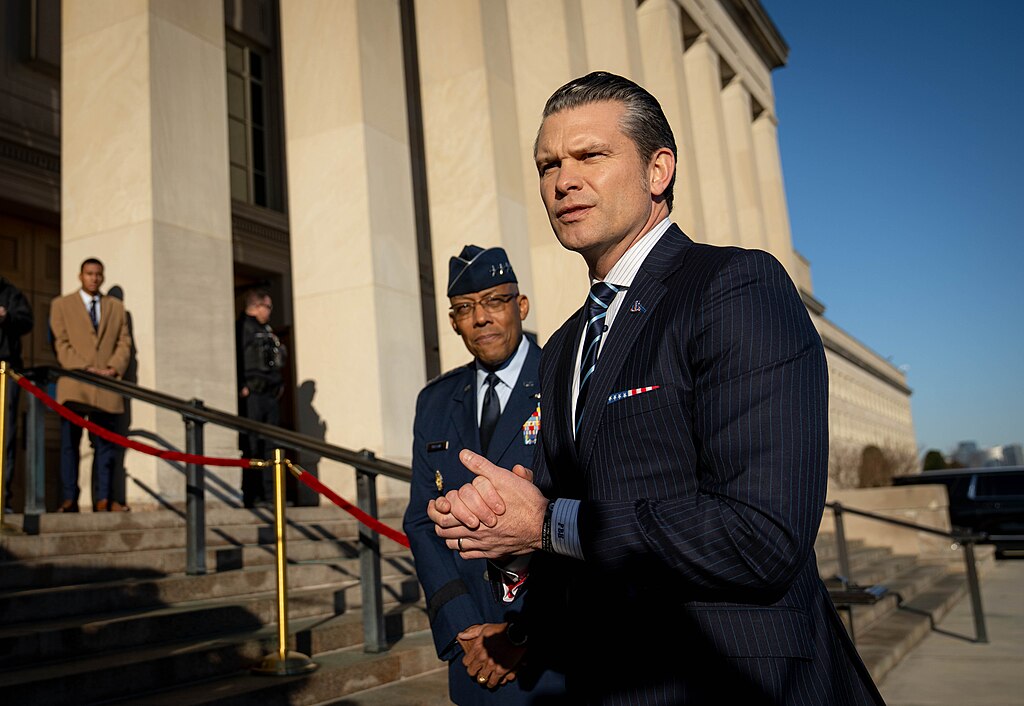
U.S. Defense Secretary Pete Hegseth has urged Australia to raise its defense spending to 3.5% of gross domestic product (GDP) "as soon as possible," according to a statement from the Pentagon. The request was made during a bilateral meeting with Australian Defense Minister Richard Marles on the sidelines of the Shangri-La Dialogue, Asia's leading defense and security forum, held on Friday.
The Pentagon said the two allies discussed a wide range of security issues, including expanding U.S. defense capabilities on Australian soil, strengthening the defense industrial base, and improving supply chain resilience between the two countries. The meeting marked only the second time the defense ministers have convened since President Donald Trump began his second term in January.
Hegseth emphasized the importance of accelerating defense collaboration and highlighted the need for enhanced regional deterrence amid increasing geopolitical tensions, particularly in the Indo-Pacific. While the U.S. is pushing for a substantial increase in Australia’s military budget, Minister Marles stated after the meeting that no specific spending target was officially discussed.
Australia has been steadily increasing its defense budget in recent years, especially in response to rising tensions with China and its broader commitment to the AUKUS alliance with the U.S. and the UK. However, reaching a defense spending level of 3.5% of GDP would mark a significant jump from current levels, estimated at around 2.1%.
The meeting reflects the Biden-Trump administration’s continued focus on strengthening strategic partnerships and burden-sharing among key Indo-Pacific allies. As global security dynamics evolve, the call for increased defense spending underscores the growing role of Australia in maintaining regional stability and supporting collective deterrence strategies.