
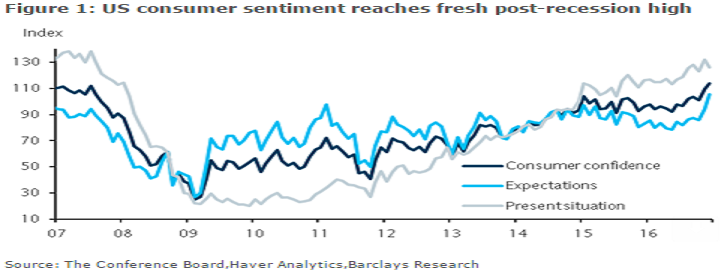
Consumer confidence in the United States remained upbeat during the month of December, jumping more than what markets had initially anticipated, in a signal that the moderation in the world’s largest economy will continue to boost household spending during the last quarter of this year.
The U.S. Conference Board’s index of consumer confidence rose to 113.7 in December, compared to 107.1 in November, extending the previous month’s gains. Although confidence was expected to improve further this month, the outturn was significantly higher than market expectations.
Consumer confidence reached a fresh post-recession high to 105.5, driven by a significant rise in consumer expectations, from previous 94.4. However, the present situation index, declined in December to 126.1, from previous 132.0.
The labor market differential, which measures the net share of consumers that saw employment as plentiful, eased lower to 4.4, compared to 6.6 previously, but it remains higher than the long-term average.
"On the whole, today’s report suggests that household confidence remains on a strong footing, and we view this as constructive for consumer spending in Q4," Barclays commented in its latest research report.
Meanwhile, the dollar index traded at 102.97, down -0.05 percent, while at 5:00GMT, the FxWirePro's Hourly Dollar Strength Index remained neutral at -12.95 (a reading above +75 indicates a bullish trend, while that below -75 a bearish trend). For more details, visit http://www.fxwirepro.com/currencyindex

